



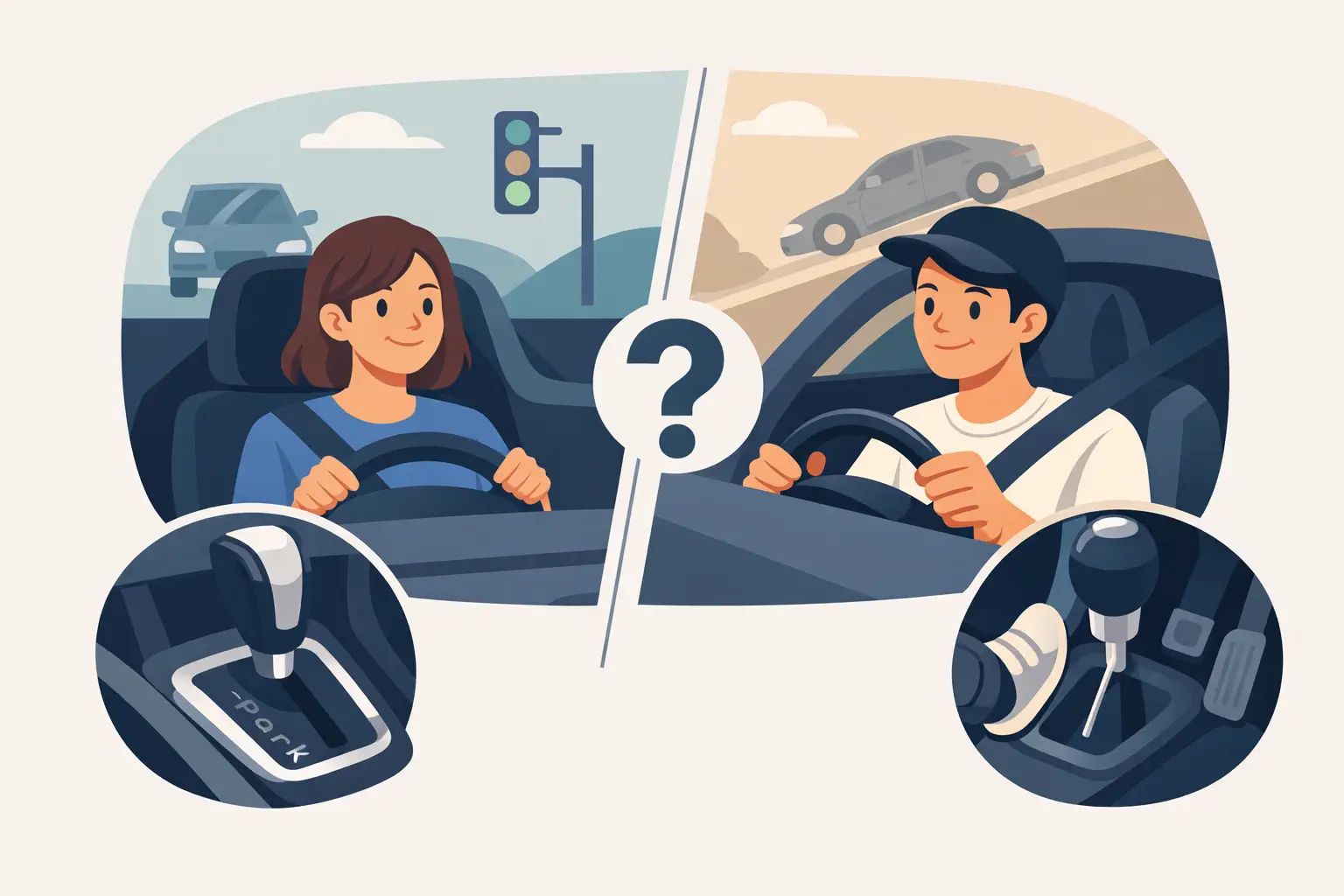
If you are feeling nervous about getting behind the wheel, you are probably asking the same question many learners do – is automatic easier to learn? For many people, the answer is yes. Automatic cars remove one of the trickiest parts of early driving, which is managing clutch control and gear changes while also watching traffic, speed signs, lane position and hazards.
That does not mean automatic is the right choice for everyone. But for plenty of learners in Perth, especially anxious beginners or people who simply want to get licensed sooner, automatic lessons can make the learning process feel calmer, clearer and more manageable.
Why automatic often feels easier to learn
When you learn in an automatic, the car handles gear changes for you. That means you can give more attention to steering smoothly, braking gently, checking mirrors, keeping a safe following distance and reading the road ahead.
For a new driver, that matters. In the early stages, there is already a lot to think about. You are learning how wide the car feels, how much pressure to use on the pedals, when to indicate, how to judge gaps and how to stay settled in traffic. Taking away clutch work reduces the mental load.
This is why people often say automatic feels easier. It is not because automatic drivers do not need skill. It is because the learning curve is usually less steep at the beginning.
Is automatic easier to learn in real traffic?
In busy suburban traffic, automatic can be especially helpful. Stop-start conditions are one of the main reasons learners feel stressed in a manual. You need to balance the clutch, select the right gear, move off smoothly and avoid stalling, all while dealing with other vehicles around you.
In an automatic, moving away from the kerb, slowing down at lights and handling traffic queues is usually more straightforward. That can help nervous learners stay focused and avoid that rushed feeling that leads to mistakes.
Perth drivers also spend plenty of time on suburban roads, roundabouts, shopping area traffic and multi-lane roads where awareness matters more than changing gears. In those situations, automatic can give learners more space to build strong road habits.
What makes manual harder for beginners
Manual driving adds a physical and mental layer to every lesson. You are not only controlling speed and direction. You are also choosing gears, coordinating your left foot with your right hand, and learning how the car responds on hills, at intersections and in slow traffic.
Some learners pick this up quickly. Others take longer, and that is completely normal. Stalling, rough take-offs and trouble finding the right gear are common when you are new.
The challenge is not just the gear stick itself. It is doing all of that while staying calm, scanning properly and making safe decisions. If you are already anxious, manual can sometimes make the first stage of learning feel heavier than it needs to be.
Automatic can build confidence faster
Confidence matters in driving lessons. When a learner feels overwhelmed, they often tense up, hesitate too long or rush the wrong decision. When they feel more in control, they usually improve faster.
That is one of the biggest advantages of automatic lessons. Early wins come sooner. You can focus on turning, parking, lane positioning and hazard awareness without also worrying about stalling in the middle of an intersection.
For many learners, that smoother start helps them stay consistent with lessons. Instead of feeling like every drive is a battle, they begin to feel capable. That confidence often leads to better habits, because they are calm enough to listen, practise and respond to feedback.
When automatic is the better choice
Automatic may suit you well if you want the simplest path to getting your licence, if you feel very nervous, or if you mainly expect to drive automatic cars anyway. It can also be a smart option for adults returning to driving after a long break, or for learners who have already struggled in manual and want a more practical way forward.
A lot of modern cars in Australia are automatic, so for many people it makes sense to train in the type of vehicle they are most likely to use every day. If your goal is safe, confident driving for work, uni, family trips or general independence, learning in an automatic can be a very sensible decision.
For learners who want patient, confidence-focused support, schools such as North East Driving School Perth often see this firsthand. Once the pressure of gear changes is removed, many students settle in quickly and start making steady progress.
When manual might still be worth learning
Even if automatic is easier to learn, manual still has its place. If you want the flexibility to drive both manual and automatic vehicles in the future, learning manual can give you broader driving skills. Some people also simply enjoy the extra control and like being more involved in how the car responds.
Manual may be worth considering if you expect to drive a work vehicle, a family car that is manual, or if having that option matters to you long term. There is nothing wrong with choosing the harder path if it suits your goals.
The main thing is being honest about what you need right now. If learning manual is delaying your progress, increasing your anxiety or making you avoid lessons altogether, it may not be the best fit at this stage.
Passing the test versus learning for life
A lot of learners ask whether automatic makes it easier to pass the driving test. It can, because there are fewer vehicle control tasks to manage. You are less likely to stall, roll back or fumble a gear change under pressure.
But passing is only part of the picture. The real goal is to become a safe and capable driver. Automatic does not replace observation, judgement or responsibility. You still need to check mirrors properly, follow road rules, manage speed, choose safe gaps and stay aware of cyclists, pedestrians and changing traffic conditions.
That is why good instruction matters either way. A calm, structured lesson approach helps you build the habits that matter beyond test day.
The trade-off most learners should think about
The biggest trade-off is simple. Automatic is often easier and faster to learn in, but manual gives you more flexibility later.
So the better question may not be only is automatic easier to learn. It may be, what kind of driver do you need to become in the next year or two? If your priority is confidence, convenience and getting on the road safely without adding extra pressure, automatic is often the stronger option.
If your priority is being able to drive any car and you are happy to spend more time mastering the mechanics, manual may be worth the effort.
Neither choice is wrong. The wrong choice is usually the one that leaves you stuck, discouraged or avoiding practice.
How to decide what suits you
Think about the car you are most likely to drive after you get your licence. Think about how nervous you feel at the start of lessons. Think about whether you want the quickest path to safe, independent driving or whether broader vehicle flexibility is more important.
It also helps to think practically. If you are balancing study, work or family responsibilities, automatic lessons may help you progress with less frustration. If you are a confident learner who likes a challenge and wants more driving options later, manual may suit you just fine.
The best choice is the one that keeps you learning, improving and turning up consistently.
So, is automatic easier to learn?
For most beginners, yes. Automatic usually feels simpler because it removes clutch control and gear changes, lowers early stress and lets you focus on the road. That can make a big difference when you are still building confidence.
Still, easier does not mean better for every person. Your decision should match your confidence level, your goals and the kind of car you are likely to drive once you are licensed.
If you are unsure, do not overthink it. The best place to start is with the option that helps you feel calm enough to learn well. Once confidence grows, everything else becomes easier too.