



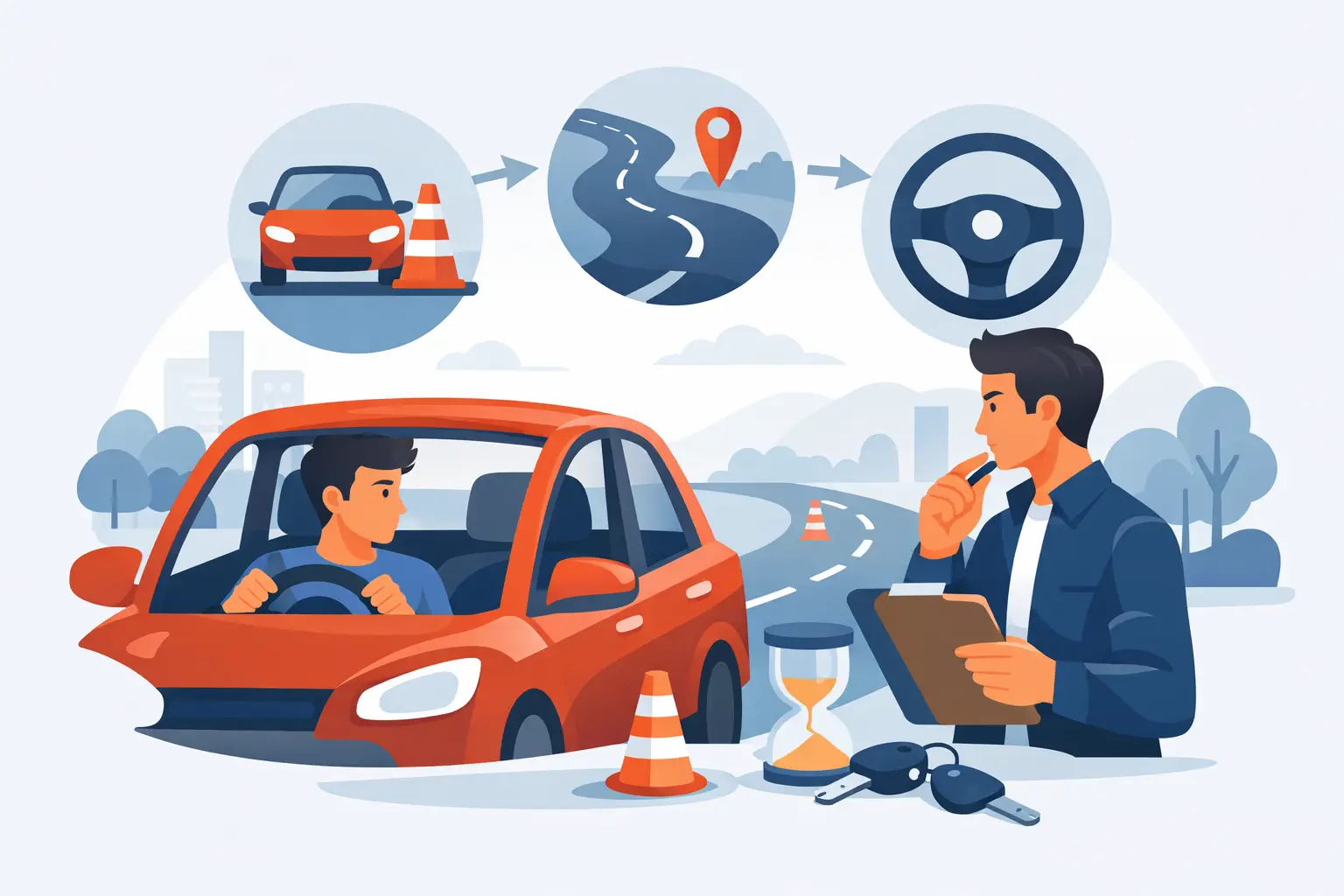
Some beginners feel steady after a handful of lessons. Others need more time before driving feels natural. If you are wondering how many driving lessons does a beginner need, the honest answer is that it depends on your confidence, how often you practise, and how quickly you can turn advice into safe habits on the road.
That said, most learners are not starting from the same point. A nervous first-time driver in Perth traffic will usually need a different amount of support than someone who has already spent time practising with a parent or supervisor. The goal is not to rush through lessons. It is to build control, judgement, and calm decision-making so you are ready for the test and for real driving after it.
How many driving lessons does a beginner need in real terms?
For many beginners, professional lessons sit somewhere between 10 and 25 sessions, with private practice in between making a big difference. At the lower end, that usually means a learner who practises regularly outside lessons, listens well, and gains confidence quickly. At the higher end, it often means a learner who is very anxious, has limited practice opportunities, or needs more time with key skills such as lane positioning, roundabouts, merging, and parking.
A professional driving lesson is not just time behind the wheel. It is guided coaching. You are learning how to observe properly, manage speed, scan hazards, make safe choices at intersections, and stay in control when traffic conditions change. That is why two learners can complete the same number of lessons but progress very differently.
In Perth, this also depends on where you are driving. Quiet suburban streets are one thing. Busier roads, school zones, roundabouts, shopping areas, and test routes ask more of a beginner. A learner who can drive comfortably in calm conditions may still need more lessons before feeling ready in mixed traffic.
What changes the number of lessons you might need?
The biggest factor is usually how much practice happens between professional lessons. One lesson a week with no extra driving can still help, but progress is often slower. A learner who has a lesson, then practises the same skills two or three times with a supervising driver, usually improves much faster.
Confidence matters too, but not in the way people think. Being confident does not always mean being ready. Some beginners feel relaxed early on but still miss mirrors, rush decisions, or struggle with hazard awareness. Others feel nervous for the first few lessons but are actually building strong, safe habits. A good instructor looks beyond nerves and focuses on control and consistency.
Age can play a role, but it is not the deciding factor. Teenagers sometimes learn vehicle handling quickly, while adult beginners may be more cautious and more focused. Both can become safe drivers. The pace simply varies.
Your learning style also matters. Some people need clear repetition. Others improve fastest when each lesson builds on the last with a specific goal. If lessons are structured well, learners tend to make better progress because they understand what they are working on and why.
The stages most beginners go through
In the first few lessons, beginners are usually learning the basics. That includes moving off smoothly, steering control, braking gently, using mirrors, signalling correctly, and understanding road position. At this stage, even simple tasks can feel like a lot because everything is new.
The middle stage is where real progress happens. This is when learners start joining traffic more confidently, dealing with roundabouts, changing lanes, turning at busier intersections, and managing speed more consistently. Many people need the most support here because this is where driving becomes less about operating the car and more about reading the road.
Later lessons are about refinement. That includes parking, hazard perception, decision-making under pressure, and test-level consistency. A learner may be able to drive from A to B before this stage, but still not be ready for the practical driving assessment. Test readiness means showing safe habits again and again, not just getting through one good drive.
A rough guide for different types of beginners
A beginner with regular supervised practice might need around 10 to 15 professional lessons to build a solid foundation and prepare for test conditions. A beginner with average confidence and only some practice between lessons may need closer to 15 to 20 lessons.
A very nervous learner, or someone starting later in life with no previous road experience, may need 20 or more lessons before driving starts to feel settled. That is completely normal. More lessons do not mean poor ability. They usually mean the learner is taking the time needed to become safe and properly prepared.
If someone has already had lessons in the past but stopped for a while, they may not be starting from zero. In that case, a smaller number of refresher or test-focused lessons can often bring them back up to standard.
Why professional lessons still matter if you can practise privately
Private practice is valuable, but it does not replace professional instruction. A qualified instructor will spot habits that family members and friends often miss. That might be rolling through a stop, checking mirrors too late, poor steering technique, or hesitation that creates risk in traffic.
Professional lessons also help beginners learn in a calm, structured way. Instead of guessing what to improve next, the learner gets clear feedback and a step-by-step path forward. That can save time and money over the long run because it reduces the chance of practising mistakes.
For anxious learners, this support can be especially helpful. A quiet, patient lesson often gives beginners the confidence to keep going when they would otherwise doubt themselves.
Signs you may need more lessons before your test
Passing the test should not be based on hope. It should be based on consistency. If you still need regular prompts for mirrors, speed, lane position, or observation at intersections, you probably need more time.
The same applies if one difficult situation throws you off for the rest of the drive. Test-ready learners can recover calmly. They do not need to be perfect, but they do need to stay controlled and safe.
Parking is another area that often reveals true readiness. If reverse parking, bay parking, or three-point turns still feel rushed or unpredictable, more guided practice can make a real difference. The same goes for busier roads, roundabouts, and merging.
A mock test can be useful here. It shows whether your standard holds up under pressure and whether there are still weak spots to fix before the real assessment.
How to reduce the number of lessons you need
The easiest way to get better value from driving lessons is to stay consistent. Long gaps between lessons often mean lost momentum. Regular sessions, with practice in between, usually lead to steadier improvement.
It also helps to treat each lesson as part of a bigger plan. If you know your focus is roundabouts, lane changes, or parking, you can practise those exact skills between lessons rather than just driving around without a purpose.
Ask questions when something does not make sense. Beginners often stay quiet because they do not want to look unsure, but that only slows things down. Clear instruction works best when the learner understands the reason behind it.
Try not to compare your progress with friends or siblings either. One person may pass quickly and still be a shaky driver. Another may take longer and come out far more prepared. Safe driving is not a race.
So, what is the best answer?
If you want a realistic starting point, many beginners benefit from around 10 to 25 professional lessons, depending on their confidence, skill level, and amount of private practice. Some will need fewer. Some will need more. What matters is not chasing a number. What matters is reaching the point where driving feels controlled, safe, and repeatable in real Perth conditions.
At North East Driving School Perth, that is the standard worth aiming for. Not just getting through a test, but building the confidence to handle everyday driving properly.
If you are just starting out, give yourself room to learn at your own pace. The right number of lessons is the number that helps you feel calm behind the wheel, make good decisions under pressure, and head into your test knowing you are genuinely ready.