



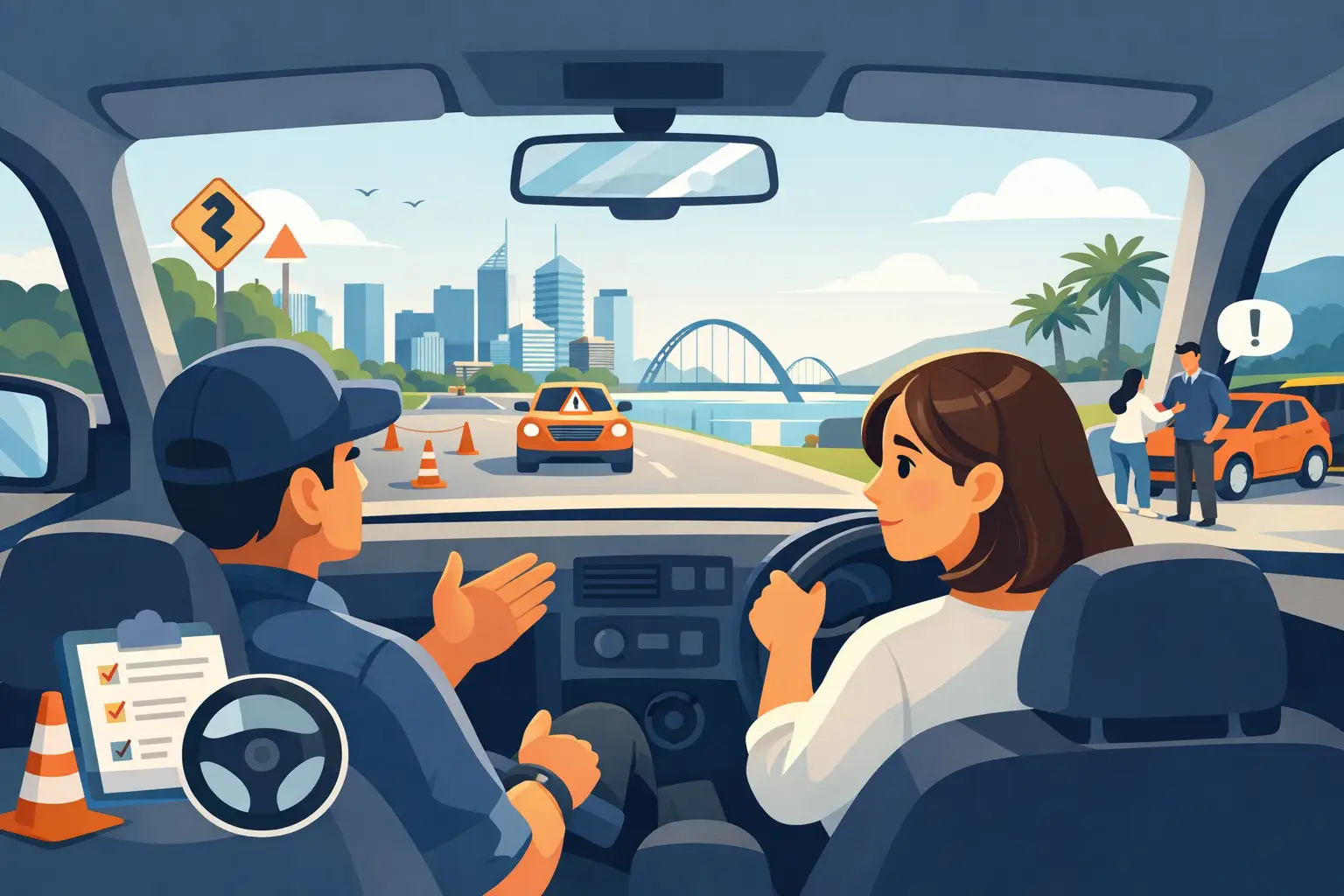
Your first few minutes behind the wheel can feel louder than they should. The indicators seem too quick, traffic feels too close, and even a simple turn can make your heart race. The best lessons for nervous drivers do not rush past that feeling. They give you a calm place to practise, clear instructions you can remember, and enough time to build control one step at a time.
Nerves do not mean you cannot become a safe driver. They usually mean you care about getting it right. With patient, structured driving lessons and regular practice on Perth roads, that anxious feeling can gradually be replaced by confidence, good judgement and steady habits.
What nervous drivers need from a lesson
A nervous learner does not need to be thrown into heavy traffic on the first lesson. They need an instructor who listens, explains what will happen before it happens, and adjusts the lesson to their current ability.
A good lesson starts with the basics: setting up the seat and mirrors, understanding the controls, moving off smoothly, braking progressively and steering with control. These skills may sound simple, but they create the foundation for everything else. When your hands, feet and eyes know what to do, your mind has more space to watch the road.
The right instructor will give one clear direction at a time. Instead of hearing a stream of instructions just before a roundabout, you should learn how to scan ahead, choose the correct lane, check for traffic and make a safe decision. Calm explanations help you understand the reason behind each action, not just memorise a route.
It also helps when lessons are built around familiar local roads. Starting in quieter Perth streets can make the car feel less intimidating. As your confidence improves, you can move on to busier intersections, roundabouts, main roads, shopping areas and the conditions you may face during your driving test.
Best lessons for nervous drivers build skills in stages
The most helpful approach is gradual progression. You should leave a lesson feeling challenged but capable, rather than overwhelmed. Some learners need extra time with parking. Others are comfortable parking but worry about lane changes or joining faster traffic. There is no benefit in pretending every learner should progress at the same pace.
Start where you feel safe
For a complete beginner, the first lesson may focus on vehicle controls and quiet residential streets. You can practise starting, stopping, turning at intersections, giving way and checking mirrors. The aim is not to cover a huge distance. It is to make the car feel predictable.
If you have driven before but feel out of practice, a refresher-style lesson may be more suitable. Your instructor can identify the areas that need attention without making you repeat skills you already have. This can be especially useful for adults returning to driving after a long break or learners who have had a poor previous experience.
Practise the situations that cause anxiety
Avoiding difficult roads can make anxiety grow. The better option is to practise those situations in a controlled way, with an instructor ready to guide you. This might include busy roundabouts, right turns across traffic, merging, lane changes, hill starts, parallel parking or navigating unfamiliar areas.
A patient instructor will break the task down. For example, a lane change is not one rushed movement. It involves checking your mirrors, checking your blind spot, signalling at the right time, judging a safe gap and moving across smoothly. Once each part becomes familiar, the whole manoeuvre feels far more manageable.
Repeat until it feels natural
Confidence is not built by doing something perfectly once. It comes from safe repetition. If a particular roundabout or parking task makes you tense, it is worth practising it more than once in the same lesson and revisiting it later.
This is where regular lessons can help. Long gaps between drives may mean you spend the first part of every lesson trying to remember what you learned last time. A consistent schedule keeps the skills fresh and gives you a clearer sense of progress.
Learn to manage nerves before they take over
Feeling nervous before driving is common. What matters is having a routine that keeps nerves from becoming panic. Arrive a few minutes early, take a slow breath and make sure you are wearing comfortable shoes that allow you to feel the pedals properly. Before moving off, adjust your seat, mirrors and steering position so you are not trying to fix them while driving.
During a lesson, look well ahead rather than staring at the bonnet or the car directly in front. Looking further down the road gives you more time to notice hazards, signs and changes in traffic. More time means fewer last-second decisions, which is one of the biggest confidence builders for nervous drivers.
It is also okay to tell your instructor when something feels too difficult. Speaking up is not a failure. It allows the lesson to be adjusted, repeated or explained differently. A good driving lesson is a working partnership, and questions are part of learning safely.
If you make a mistake, do not replay it for the next ten minutes. Safely correct what you can, listen to the feedback and focus on the next decision. Every experienced driver has made awkward turns, stalled, braked too hard or missed an exit while learning. The useful question is always: what can I do differently next time?
Driving test preparation without extra pressure
For many learners, test nerves are stronger than driving nerves. The thought of an assessor sitting beside you can make ordinary tasks feel difficult. Pre-test lessons and mock driving tests can make the process feel more familiar before the day arrives.
A mock test should be realistic but supportive. It can help identify whether you need more work on observation, speed control, road positioning, parking, decision-making or responding to instructions. You also get the chance to practise recovering calmly if you make a small error, rather than assuming one imperfect moment means the test is over.
The best preparation is not trying to memorise every possible test route. It is learning safe habits that work anywhere: checking mirrors before changing speed or direction, scanning intersections, keeping a safe following distance, choosing a suitable gap and following road rules consistently. When these habits are secure, unfamiliar roads are less frightening.
Using the same training vehicle for your test can also reduce pressure for some learners. You already know the controls, visibility and feel of the car. If vehicle hire and a pre-test warm-up are available, they can make the test day more organised and give you time to settle in before the assessment.
Choosing a driving school in Perth
When comparing driving schools, look beyond the lesson price alone. Nervous learners benefit from an instructor who is patient, punctual and clear, as well as a school that offers lessons in your area and appointment times you can maintain. A cheap lesson is not always good value if you leave confused or frightened to drive again.
Ask whether the school provides automatic lessons, refresher support, lesson packages, mock tests and test-day vehicle hire if those services matter to you. The best option depends on where you are starting. A beginner may benefit from a structured package, while a learner close to their test may need a focused pre-test session and mock assessment.
North East Driving School Perth supports learners with practical, safety-focused instruction designed to build confidence as well as driving ability. The goal is to help you become ready for your test while developing the awareness and control needed for everyday Perth driving.
Give yourself permission to learn slowly
You do not need to feel fearless before you start driving independently. You need to know how to stay calm, make safe decisions and respond to changing road conditions. Those abilities are learned through clear instruction, practice and honest feedback.
Choose lessons that meet you at your current level, then keep showing up for the next small improvement. One controlled turn, one calm roundabout and one confident parking manoeuvre at a time can change the way driving feels.