



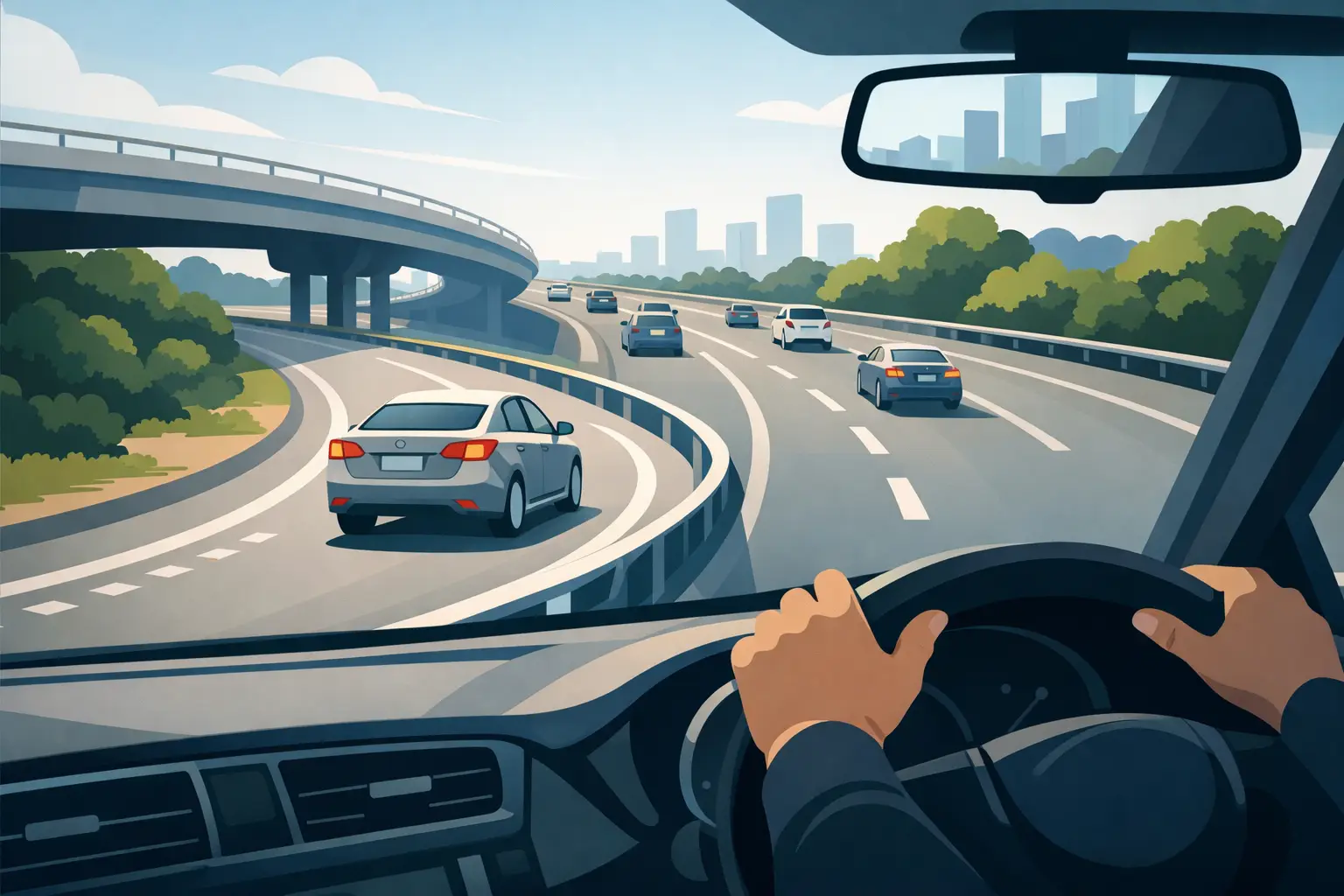
A freeway merge can feel like the fastest, busiest part of a driving lesson. Cars are moving at higher speeds, the ramp is getting shorter, and it can seem as though everyone is watching you make a decision. The good news is that learning how to merge onto freeways is not about being aggressive or taking risks. It is about planning early, matching the traffic flow and making one calm, controlled move.
For learner drivers in Perth, freeway driving is a valuable skill for everyday independence. Whether you are joining the Mitchell Freeway, Kwinana Freeway, Roe Highway or another major route, the same safe habits apply.
What merging onto a freeway really means
When you enter a freeway, you are joining traffic that already has the right of way. Drivers travelling on the freeway may move over if it is safe and practical, but you cannot rely on them to do so. Your job is to find a safe space in the traffic, adjust your speed to suit that space and enter without forcing another driver to brake sharply or swerve.
This is why looking only in your mirrors is not enough. A safe merge requires you to read the road ahead, check the traffic beside you and understand what is happening behind you. It sounds like a lot at first, but with practice, these checks become a smooth routine.
How to merge onto freeways safely
A strong freeway merge starts before you reach the end of the entry ramp. As you turn onto the ramp, look well ahead at the freeway traffic. Start identifying possible gaps early rather than waiting until the last few metres. You are not choosing a tiny opening between cars. You are looking for a comfortable space where you can enter without rushing.
Use the full length of the acceleration lane where available. The purpose of this lane is to let you build speed before joining freeway traffic. If the freeway is moving at 80 km/h or 100 km/h, entering at a much slower speed can make it harder for both you and other drivers to merge safely.
As you build speed, check your rear-view mirror, side mirror and blind spot. Indicate right when you are preparing to move into the freeway lane. Keep looking ahead as well. Your eyes should move between the road ahead, the traffic gap, your mirrors and your blind spot. Do not stare at one place for too long.
Once you have a safe gap, steer smoothly into the lane. Avoid sudden braking, sharp steering or stopping at the end of the ramp unless there is no safe alternative. After you have merged, cancel your indicator if needed, leave a safe following distance and settle into the speed of the traffic.
Match the flow, not just the speed limit
The posted speed limit matters, but the immediate traffic conditions matter too. On a clear Perth freeway, traffic may be travelling close to the speed limit. In heavy traffic, roadworks or wet weather, vehicles may be moving much slower.
The goal is to approach the freeway at a speed that allows you to fit safely into your chosen gap. If the vehicle in front of you is moving slowly, do not tailgate it in an attempt to rush the merge. Leave room, stay patient and reassess the traffic. If your acceleration lane gives you extra distance, use it.
A common learner mistake is becoming so focused on reaching a certain speed that they stop watching for a gap. Another is slowing down too early because freeway traffic looks intimidating. Good merging balances both. Build suitable speed while continually reading the vehicles around you.
Choose a gap with enough space
The safest gap is usually one that gives you time and room both in front and behind. If you are trying to fit into a space that disappears as soon as you enter, it is probably too tight.
Look at the pattern of traffic, not just one car. Is there a truck with a larger gap behind it? Is a vehicle in the left lane already indicating to move right? Is traffic bunching up because vehicles are braking ahead? These details help you choose a better moment to merge.
It is also helpful to give yourself a target. Instead of thinking, “I need to get in somewhere,” choose a space such as “behind the white SUV” or “in front of the truck, if it remains safe”. This gives your merge a clear plan. If that plan changes, do not panic. Keep driving safely and look for the next suitable gap.
Do not assume other drivers will make room
Some freeway drivers will change lanes to create space for you. Others may not be able to because another vehicle is beside them. Some may simply continue at the same speed. Treat any helpful action from another driver as a bonus, not something you expect.
You should also avoid waving people through, making sudden moves or relying on eye contact at freeway speed. Clear signalling, safe speed and predictable driving communicate your intention far better.
If another driver closes the gap or accelerates, let them go. A missed gap is not a failure. Trying to force your way in is where a stressful situation can become unsafe.
What to do when the ramp is running out
This is the moment that worries many learners. You may reach the end of the acceleration lane and still not have a clear opening. First, keep your head up and stay calm. Do not swerve onto the freeway, and do not brake hard unless you need to avoid a collision.
Where possible, adjust your speed slightly to fit behind a vehicle rather than trying to get in front of it. Often, easing off the accelerator a little creates a safe space behind the next car. Continue checking mirrors and your blind spot before moving across.
Stopping at the end of a freeway entry lane can make it difficult to rejoin fast-moving traffic, so it should be avoided where possible. However, safety always comes first. If traffic conditions leave no safe option, follow the road layout, stop only when necessary and wait for a genuinely safe opportunity.
Freeway merging mistakes to avoid
New drivers often make the same understandable mistakes when they are nervous. Knowing them early makes them easier to correct:
- Merging too slowly and causing freeway drivers to brake or change lanes suddenly.
- Looking only at the car in front and missing traffic in the lane beside you.
- Forgetting the blind-spot check before moving across.
- Braking heavily at the end of the ramp instead of using the available lane to plan ahead.
- Trying to enter a gap that is too small because you feel pressured by traffic behind you.
The answer is not to drive faster or take chances. It is to look further ahead, make your decision earlier and keep your movements smooth.
Build confidence before doing it alone
Freeway merging feels much easier when you first practise it with a calm, experienced supervisor or driving instructor. Start at quieter times of day, when traffic is lighter and you have more time to observe the process. Repeat the same entry ramp a few times so you can focus on your checks and speed rather than unfamiliar directions.
As your confidence grows, practise in different conditions. Try busier traffic, different freeway entries and situations where you need to merge behind a larger vehicle. You will learn that every merge is slightly different, but your method stays the same: observe early, build appropriate speed, check carefully and join only when it is safe.
At North East Driving School Perth, practical lessons can help you practise freeway entries in a supportive, low-pressure setting. Learning the process properly now can make solo driving feel far less stressful later.
The next time you approach a freeway ramp, give yourself permission to stay calm. You do not need to rush to prove anything. Read the traffic, choose your space and make one safe, confident move.