



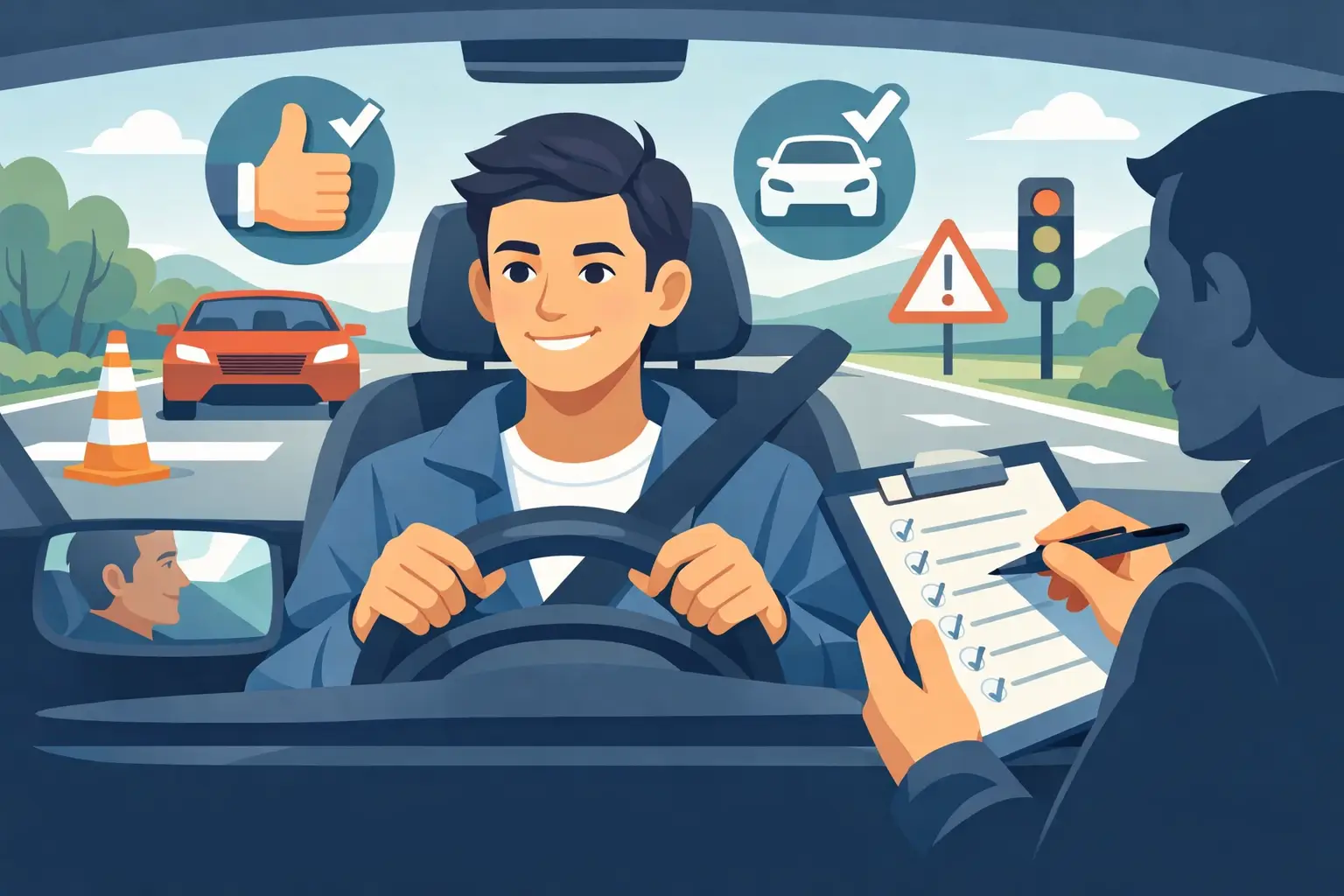
A mock test can feel almost as nerve-racking as the real thing, especially when an instructor starts giving directions and quietly marking your drive. That is exactly why it works. If you are wondering how to pass mock driving test sessions with confidence, focus less on trying to be perfect and more on showing safe, calm and consistent driving decisions.
A good mock driving test gives you a realistic picture of where you are ready and where you need more practice before your practical assessment. It is not designed to catch you out. It is a chance to practise under pressure while you still have an instructor beside you to explain what happened and how to improve.
Understand what a mock driving test is testing
A mock test usually follows the same kind of driving situations you may face during your licence test in Perth. You may be asked to drive through suburban streets, busier roads, roundabouts, intersections and shopping areas. Your instructor may also include manoeuvres such as a reverse park, three-point turn or kerbside stop, depending on what you need to practise.
The main goal is not simply getting from one street to another. Your instructor is looking at whether you can control the vehicle, follow road rules, observe hazards and make safe decisions without being prompted.
Small mistakes are not always a disaster. Missing a turn, for example, is usually safer than making a sudden lane change or turning across traffic because you feel rushed. What matters is how you respond. Stay calm, continue safely and listen for the next direction.
Treat the mock test like the real test
The best way to prepare is to take the session seriously from the moment you get in the car. Arrive on time, wear suitable shoes and have your learner logbook or paperwork organised if required. Before moving off, adjust your seat, mirrors and steering wheel position so you are comfortable and have a clear view.
During the drive, avoid relying on hints from your instructor. A mock test is most useful when you make your own observations and decisions. If you are unsure about an instruction, it is fine to ask for it to be repeated. Guessing can lead to an unsafe move.
Try not to chat your way through nerves. Some learners concentrate better in silence, while others benefit from quietly saying key observations to themselves, such as “clear left, clear right” or “pedestrian near crossing”. Find what helps you stay focused without taking attention away from the road.
Build the habits assessors can see
Safe driving is made up of visible habits. Your assessor cannot read your mind, so your observation and decision-making need to be clear in the way you drive.
Check mirrors and blind spots properly
Use your mirrors regularly, not only when you are about to turn. Check before changing speed, moving off, turning, changing lanes and pulling over. When moving sideways or leaving the kerb, complete a clear head check for vehicles, cyclists and other road users in your blind spot.
A quick glance is enough when it is done at the right time. The goal is to keep your eyes moving while still looking ahead for most of the drive.
Keep a safe, legal speed
Many learners lose confidence by watching the speedometer too much. Check it often, but keep your vision up so you can read the road ahead. Watch for school zones, roadworks, changing speed signs and conditions that call for a slower speed.
Driving exactly at the limit is not always the safest choice. On a narrow residential street with parked cars, poor visibility or wet roads, you may need to slow down. Smooth speed control shows good judgement.
Make your turns controlled and planned
Plan turns early. Check mirrors, indicate in time, position the car correctly, reduce speed smoothly and check for pedestrians before entering or leaving a street. At intersections, take the time needed to make sure the way is clear. There is no prize for rushing into a gap.
Roundabouts can be challenging because there is a lot to observe at once. Approach at a manageable speed, give way correctly, stay in the appropriate lane and indicate when exiting. If traffic is busy, patience is safer than forcing your way through.
Practise the areas that make you anxious
Most people do not fail a mock test because they cannot drive at all. They struggle because one or two situations make them tense. It may be reverse parking, multi-lane roundabouts, hill starts, lane changes or driving on unfamiliar roads.
Tell your instructor what worries you before the mock test begins. That makes the session more useful. You may need a lesson focused on one skill before attempting a full mock assessment, particularly if a manoeuvre is still new.
For parking manoeuvres, slow down and use a consistent method. Check the area first, set up the car carefully and make small steering adjustments. Rushing the setup is where many reverse parks go wrong. If you need to correct your position safely, do so. A controlled correction is better than pretending the car is parked well when it is not.
Learn from mistakes without losing momentum
The most valuable part of a mock test happens after the drive. Ask your instructor to explain not only what was marked, but why it mattered and what you should do next time. For example, an incomplete head check may be linked to a risk of missing a cyclist. Braking late may show that you were not scanning far enough ahead.
Write down your main feedback while it is fresh. Keep it simple. You might have one point about observation, one about speed control and one manoeuvre to practise. Trying to fix ten things at once can make your next drive feel harder than it needs to be.
It also helps to separate serious errors from minor habits. A serious safety issue needs immediate attention. Minor points, such as a late indicator or slightly rough braking, still matter but can often improve quickly with focused practice.
Use practice drives between mock tests
A mock test should not be your only preparation. Use normal driving lessons and supervised practice to repeat the skills you were given feedback on. Drive in different Perth conditions where possible, including quieter suburban streets, roundabouts, shopping precincts and roads with more traffic.
You do not need to memorise a possible test route. Routes can change, and relying on familiar streets can make you less prepared for the unexpected. Instead, practise the skills that work anywhere: reading signs early, choosing safe gaps, maintaining space around the car and responding calmly to other road users.
Before your next mock test, use this short check:
- Can you move off, pull over and re-enter traffic with clear observation?
- Can you manage speed without constant reminders?
- Can you follow directions while still watching for hazards?
- Can you complete common manoeuvres slowly and safely?
If one answer is no, that does not mean you are not progressing. It simply gives you a clear priority for your next lesson.
Get your test-day routine ready
Confidence is easier when the practical details are organised. If you plan to use a driving school vehicle, spend enough time driving that same car beforehand so the controls feel familiar. Know where the indicators, demister, lights and windscreen wipers are, and be comfortable with the mirrors and seating position.
The night before your test, avoid last-minute cramming. A short review of your feedback can help, but rest is more useful than overthinking every possible mistake. On the day, arrive early, take a few slow breaths and focus on the first safe action: setting up the car correctly before you move.
At North East Driving School Perth, a mock test can help turn vague nerves into practical feedback, with calm guidance on the skills that need attention before your assessment.
Your mock test does not need to be flawless to be worthwhile. Use it as proof of what you can already do, then practise the few things that will make your driving safer, steadier and more confident when it is time to sit your real test.