



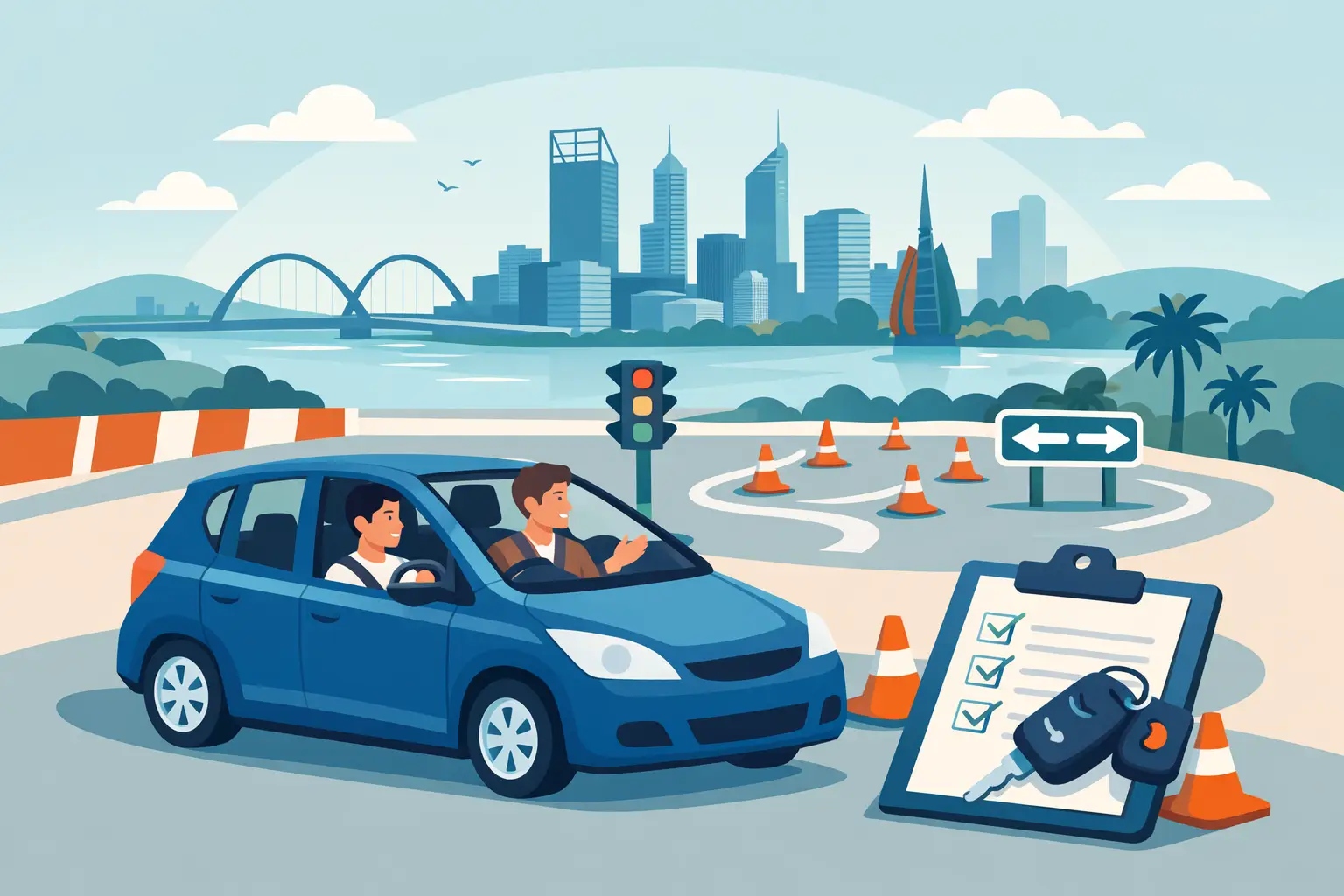
The car you drive on test day can either help you settle quickly or give you one more thing to worry about. If you have been learning in a family car that is unavailable, unfamiliar or not suitable for the assessment, hiring a car through a driving school can be a practical solution. This driving test car hire guide explains what to expect, what to check and how to make the most of the vehicle before your Perth driving test.
Why hire a car for your driving test?
Car hire for a driving test is not about finding a shortcut. You still need the skills, observation and judgement to drive safely. What it can do is remove avoidable pressure on a day when nerves are already high.
Many learners have practised in an instructor’s automatic car and feel comfortable with its steering, brakes, mirrors and controls. Switching to a different car for the practical driving assessment can make simple tasks feel less familiar. You may need to think harder about the indicator position, brake sensitivity, demister or reversing camera when your attention should be on the road.
Hiring the same car you have used in lessons gives you a familiar space to work in. That can help you focus on smooth control, safe decisions and following the assessor’s directions. It is particularly useful if your household car is a manual, too large for your confidence level, has a warning light on, or cannot be made available at the test time.
For learners without access to a suitable vehicle, test-day hire also brings convenience. A driving school vehicle is generally maintained for learner use, and your instructor can make sure you have time to settle in before the assessment.
Driving test car hire guide: choose familiarity first
The best test car is usually not the newest or fanciest vehicle. It is the one you can drive calmly and safely. If you are applying for an automatic licence, an automatic vehicle you have already practised in is often the sensible choice.
Before booking, ask whether you can have a pre-test lesson or warm-up drive in the same car. Even 30 to 60 minutes before the test can help you adjust your seating position, mirrors and pedal feel. It also gives you a chance to practise the areas that often cause stress, such as moving off from the kerb, roundabouts, lane changes, reverse parking and three-point turns.
A suitable test vehicle should be clean, legal and in safe working order. Its lights, indicators, tyres, horn, windscreen wipers, seatbelts and mirrors need to be ready for use. Your instructor or hire provider should handle vehicle readiness, but it is still wise to arrive early and take a quiet moment to check that you can locate the main controls.
Do not choose a car simply because it has extra technology. Parking sensors and a reversing camera may be useful, but they do not replace checking mirrors, looking over your shoulder and controlling the car at a safe speed. The assessor needs to see that you are aware of your surroundings, not that you rely on a screen.
What is usually included with test-day car hire?
Every provider structures car hire differently, so confirm the details before you book. In many cases, car hire is paired with a driving lesson or pre-test session, followed by use of the vehicle for the practical assessment. This approach gives you a chance to arrive at the test location prepared instead of rushing from another car or relying on a lift.
Ask clear questions about the booking. Find out how long the hire period is, whether a pre-test drive is included, whether the instructor will take you to and from the test location, and what happens if the assessment runs late. Check the price and cancellation conditions as well, especially if your test booking changes.
It is also worth confirming what type of licence the car supports. Taking your assessment in an automatic vehicle may affect the type of licence you receive. If you plan to drive a manual vehicle later, speak with your instructor about the right pathway before test day.
At North East Driving School Perth, learners can combine practical preparation with vehicle hire, which can make the final steps feel more organised. The goal is not to overload you with last-minute advice. It is to give you a familiar car, calm support and enough practice to show what you can already do.
Prepare the driver, not only the car
A well-presented vehicle will not carry an underprepared driver through the test. The strongest reason to hire a car is that it supports the work you have done during lessons and private practice.
In the days before your assessment, focus on the habits that show safe driving. Scan well ahead, check mirrors regularly, leave a safe gap, keep to the posted speed limit and use your indicators with enough time for other road users to understand your intention. In Perth traffic, that also means watching carefully for cyclists, pedestrians near crossings, school zones and vehicles entering from side streets.
Practise listening to directions without panicking if you make a small mistake. A wrong turn does not automatically mean you have failed. If it is safe, continue driving as directed or follow the assessor’s next instruction. Trying to correct a missed turn suddenly can create a much bigger problem than taking a different route.
Your pre-test session is a good time to identify one or two priorities, rather than attempting to fix everything. Perhaps you need smoother braking at roundabouts, more consistent head checks before changing lanes, or better judgement when choosing a safe gap. Small improvements in these areas can make a real difference.
Get comfortable with the controls
Before the assessment begins, set your seat so you can fully press the pedals without stretching. Adjust the steering wheel if needed, fasten your seatbelt and set the rear-view and side mirrors properly. Know where to find the indicators, headlights, wipers, demister, hazard lights and handbrake or parking brake.
If the weather is wet, make sure you are comfortable using the wipers and demister before you leave. A clear windscreen is part of safe driving, and struggling with controls while moving can distract you from traffic conditions.
Know what to bring and check
Bring the identification and documents required for your test booking, and arrive with enough time to avoid rushing. Requirements can change, so check the current instructions from the licensing authority before the day.
Try to sleep well, eat something light and wear comfortable shoes that give you a good feel for the pedals. Avoid bulky footwear, and avoid arriving after too much caffeine if it makes you shaky. Nerves are normal, but a steady routine can keep them manageable.
Common car hire mistakes to avoid
The biggest mistake is booking a car without driving it first. Even two automatic cars can feel very different in their braking, steering and visibility. If possible, complete at least one lesson in the exact vehicle you will use for the assessment.
Another mistake is treating the warm-up drive as a final exam. You do not need to perform perfectly before the test begins. Use that time to settle your breathing, refresh your observations and ask one last practical question. Save your mental energy for safe, controlled driving during the assessment.
Finally, do not assume car hire removes the need for private practice. Lessons are valuable, but confident drivers build their skills through regular time on the road in different conditions. Practise on suburban streets, busier roads, at roundabouts and in parking areas where it is safe to do so. The more normal driving feels, the less the assessment will feel like a big performance.
A calmer way to approach test day
Plan to arrive early, have your pre-test drive, then give yourself a minute before the assessment to reset. Take a slow breath, place both hands comfortably on the wheel and remind yourself of the task: drive safely, legally and with good observation.
Hiring a familiar car can make test day simpler, but your preparation is what creates real confidence. With the right support, enough practice and a vehicle you feel comfortable driving, you can walk into your Perth assessment ready to show safe driving skills that will matter long after you receive your licence.