



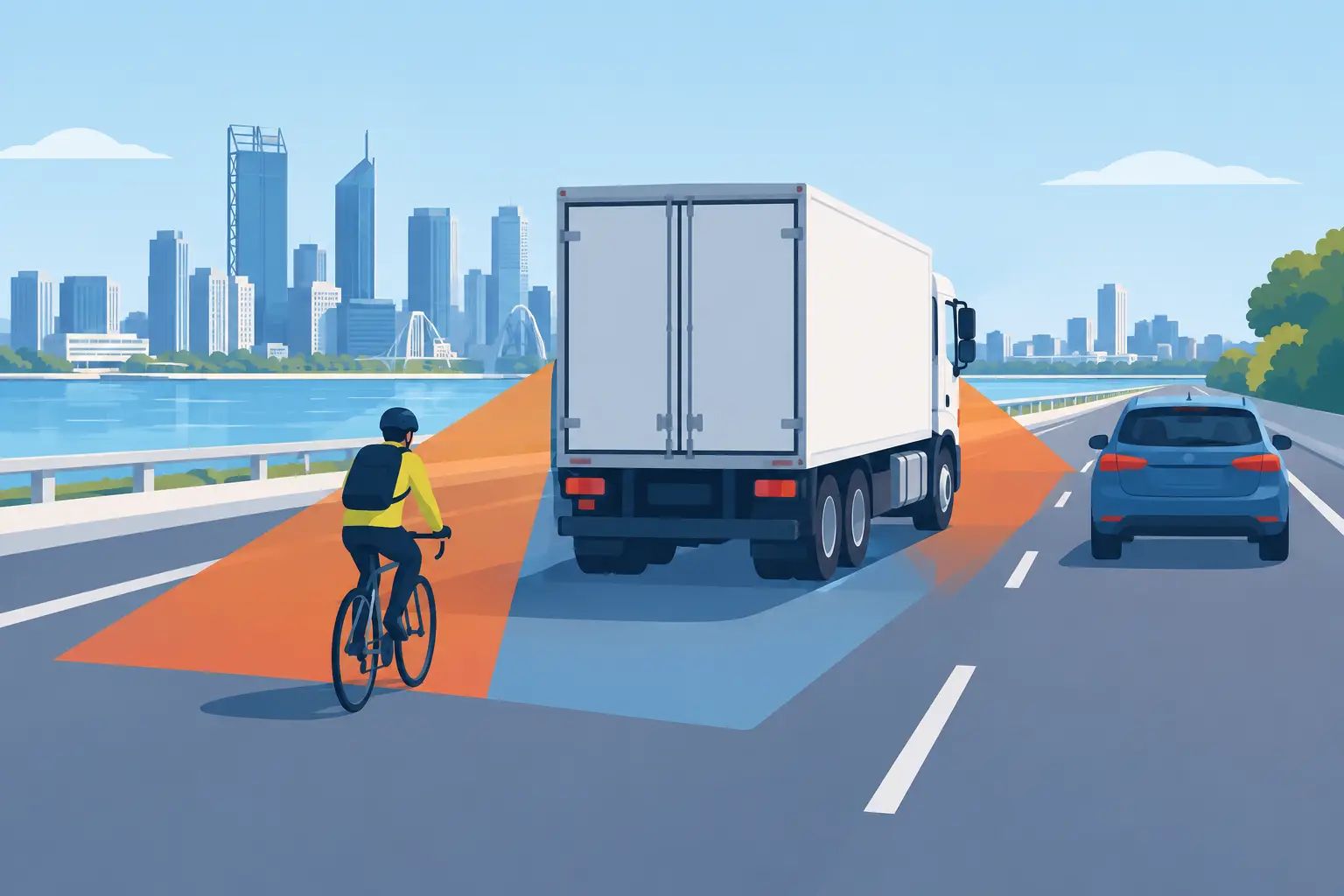
A quick mirror glance can make you feel certain a lane is clear. Then, as you begin to move, a motorbike, car or cyclist appears beside you. That is exactly why learning how to manage blind spots is not just a driving test skill. It is a daily safety habit that helps protect you, your passengers and everyone sharing Perth roads.
Blind spots can be worrying for new drivers because they are areas around your vehicle that cannot be seen properly in your mirrors. The good news is that they are manageable. With correctly adjusted mirrors, calm observation and regular practice, checking blind spots becomes a natural part of controlled driving.
What are blind spots?
Your rear-view mirror gives you a view of the road directly behind your car. Your side mirrors show traffic on either side. However, there are still areas beside and slightly behind the vehicle that are hidden from those mirrors. These are your blind spots.
The most common blind spots are over your left and right shoulders. A vehicle travelling close beside you can disappear from your mirrors for a moment, particularly on multi-lane roads. Motorbikes and bicycles are even easier to miss because they take up less space and can approach quickly.
Blind spots are not limited to lane changes. They can also affect you when pulling away from the kerb, turning, reversing, entering traffic and opening a door after parking. The risk changes depending on your vehicle, mirror position, traffic conditions and what is happening around you.
How to manage blind spots before you drive
Good blind-spot management starts before the engine is even running. Set yourself up properly so you have the clearest possible view around the vehicle.
First, adjust your seat. You should be able to reach the pedals comfortably, hold the steering wheel with a slight bend in your arms and see clearly through the windscreen. If you are sitting too low, too far back or leaning forward, your mirror checks can become less effective and less comfortable.
Next, adjust the rear-view mirror to frame as much of the rear window as possible. Then set the side mirrors so you can see traffic beside the vehicle while still keeping a small reference of your own car. You do not need to see large sections of the doors in the mirrors. The aim is to reduce the gap between what your rear-view mirror and side mirrors can show you.
Properly adjusted mirrors reduce blind spots, but they do not remove them completely. A shoulder check is still necessary whenever you are moving sideways, pulling out or changing your vehicle’s position.
Keep windows and mirrors clear
Rain, glare, dirt and fogged-up glass can make a small blind spot much larger. Before leaving, make sure mirrors, windows and lights are clean. Use demisters when needed and do not rely on a quick look through a dirty side window.
If you wear glasses, take a moment to notice whether the frames affect your peripheral vision. You may need to move your head slightly more during observation checks.
The safe routine for lane changes
A lane change should never be rushed. Whether you are moving around a parked car, joining a freeway lane or changing position before a turn, use a consistent routine.
Check your mirrors first so you understand the traffic behind and beside you. Indicate early enough to give other road users clear notice of what you plan to do. Then perform a quick shoulder check towards the side you are moving. Only move across when there is a safe gap and you can do so smoothly without forcing another driver to brake or change direction.
The shoulder check should be brief. Turn your head enough to look through the side window and check the blind-spot area, then bring your eyes back to the road ahead. You are not taking a long look behind you. You are confirming that no person or vehicle is hidden beside the car.
Keep both hands in control of the steering wheel and avoid sudden movements. If the lane is not clear, stay where you are and wait. Missing a turn or taking a different route is always safer than squeezing into a gap that is not there.
Do not assume an indicator creates space
Your indicator communicates your intention. It does not give you automatic right of way. Another vehicle may already be beside you, may be travelling in your blind spot or may not have enough room to let you in safely.
This matters on busy Perth roads, especially near shopping areas, freeway entries and multi-lane intersections. Give yourself time. A calm driver notices more and makes better decisions than a driver who feels pressured to change lanes at the last second.
Blind-spot checks when pulling away
When you pull out from the kerb, check more than the mirrors. Pedestrians may be walking nearby, cyclists may be coming up the side of the road and vehicles may be approaching from behind.
Use your indicator, check your mirrors, then check the blind spot over the shoulder facing the traffic lane. If it is clear, move off gradually while continuing to look ahead. This observation routine is particularly important in suburban streets where children, bikes and parked cars can make the road environment harder to read.
When leaving a parking bay, take extra care. Vehicles, trolleys and people can emerge from between cars with little warning. Reverse slowly and keep checking all around the vehicle. Your reversing camera or parking sensors can help, but they are aids, not replacements for active observation.
Watch closely for motorbikes and cyclists
Motorbike riders and cyclists can be difficult to see in a blind spot. They may also be affected by potholes, loose gravel, opening car doors or sudden changes in traffic. Give them room and avoid moving across until you have clearly confirmed the space is safe.
At intersections and when turning, check for bicycles travelling along the left side of your vehicle. Before turning left, look in the left mirror and complete a left shoulder check where needed. Never cut across a cyclist’s path because you are trying to make a turn quickly.
Be especially patient in slow traffic. A motorbike may be filtering through stationary or crawling vehicles, and a cyclist may be travelling along the edge of the lane. Look carefully before changing position, even when traffic is moving slowly.
Common blind-spot mistakes learners make
Many learners know they should check blind spots, but the habit can break down when they are busy thinking about steering, speed or directions. One common mistake is checking too early. If you look over your shoulder, then wait several seconds before changing lanes, the situation beside you may have changed. Complete your final shoulder check just before you move.
Another mistake is staring at mirrors instead of scanning them. Mirrors should be checked regularly and briefly. Long looks away from the road ahead reduce your awareness of braking traffic, curves and hazards in front of you.
Some drivers also make an exaggerated head movement that pulls the steering wheel slightly. Practise turning your head while keeping your arms relaxed and the car travelling straight. This is easier when you are calm and holding the wheel correctly.
Finally, do not treat blind-spot checks as something you only do during a driving assessment. Examiners look for safe observation because it is a real-life skill. Building the habit now makes it far easier to stay safe once you are driving independently.
Build confidence through practice
The best way to become comfortable with blind spots is through repeated practice in low-pressure situations. Start on quiet suburban roads with an experienced supervising driver or instructor. Practise pulling away from the kerb, moving around parked cars and making simple lane changes where traffic is light.
As your confidence grows, practise on busier roads and in different conditions. Night driving, rain, peak-hour traffic and unfamiliar streets all require a little more planning. You do not need to be perfect immediately. You need a safe routine you can repeat every time.
A driving instructor can also point out observation habits you may not notice yourself, such as checking too late, missing a mirror glance or drifting while looking over your shoulder. At North East Driving School Perth, practical lessons can help you build these skills in real traffic at a pace that feels manageable.
The road will not always give you perfect gaps or predictable drivers. Give yourself space, keep your checks calm and never feel embarrassed about waiting for a safer opportunity. That one extra shoulder check can be the decision that keeps a routine drive safe.