



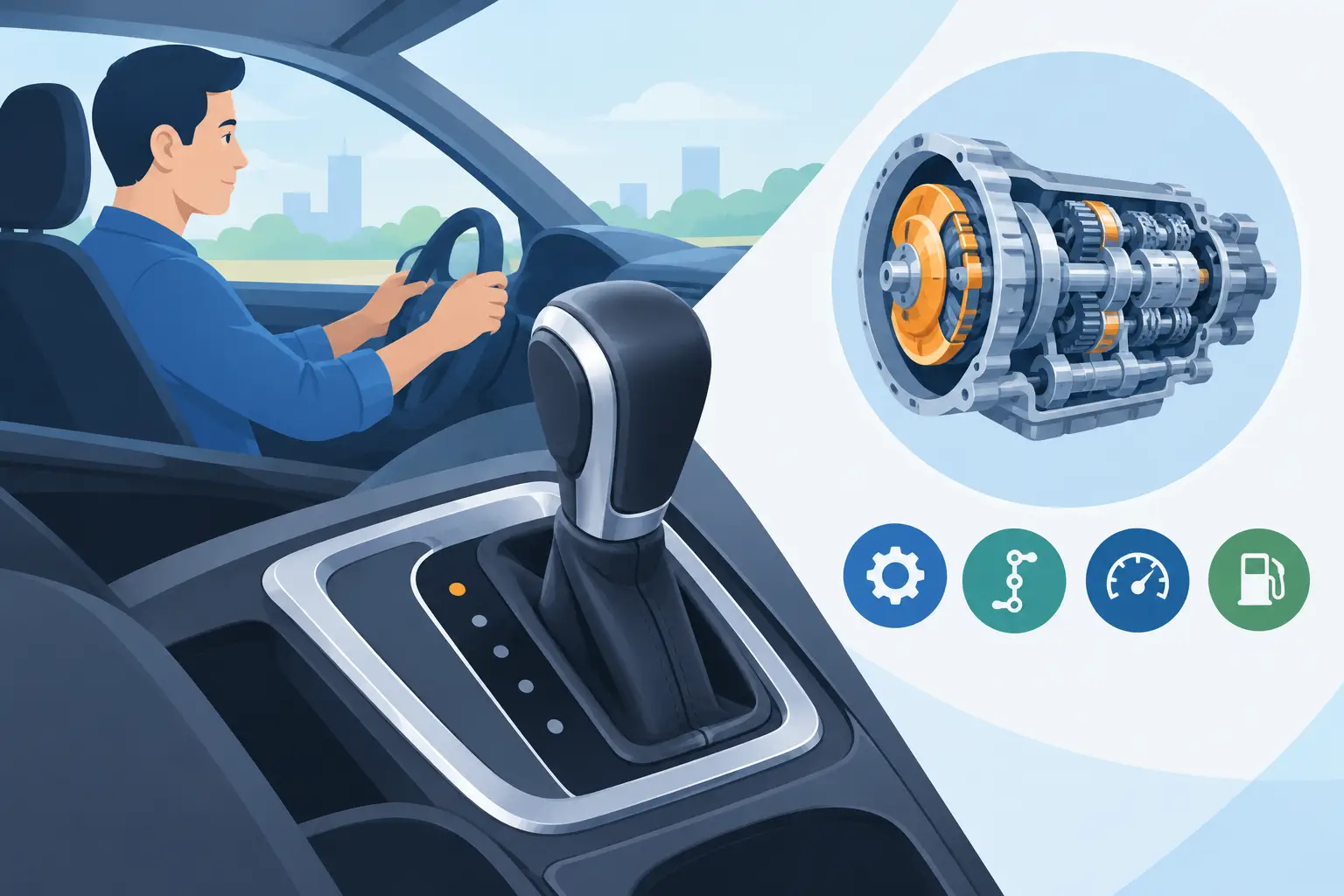
An automatic car removes the clutch pedal, but it does not remove the need for good control. This automatic transmission control guide is designed for Perth learner drivers who want smoother starts, calmer manoeuvres and safer habits before their practical driving test.
Many new drivers assume automatic means easy from the first lesson. The gear changes are simpler, but steering, speed choice, observation, braking and positioning still need practice. The aim is not to rush. It is to build control until each action feels steady and deliberate.
Know your automatic gear selector
Before moving off, take a moment to identify the main selector positions. Most automatic cars use P for Park, R for Reverse, N for Neutral and D for Drive. Some vehicles also have S for Sport, L for Low, or numbered settings that hold lower gears for extra engine braking or pulling power.
For everyday learner driving, Drive is the normal forward setting. Park is used when the vehicle is parked and secured. Reverse is only selected when the car is fully stopped and you have checked carefully around the vehicle. Neutral is not a coasting mode for normal driving. Keep the car in Drive when travelling and use the brake pedal to manage your speed.
The layout can vary between cars. Some have a traditional selector lever, while others use buttons, a dial or a small electronic shifter. Never guess. Ask your instructor to show you the controls before you leave the kerb, especially if you are using a different car for a test or a vehicle hire booking.
Start with the right foot position
In an automatic, use your right foot for both the accelerator and brake. Your left foot should rest on the footrest, away from the pedals. Using both feet can lead to accidental braking or pressing the brake and accelerator together, which makes the car harder to control.
Before starting, adjust the seat so you can press the brake firmly without stretching. Set your mirrors, check that the handbrake is on, and make sure the selector is in Park. With your foot on the brake, start the engine. This simple routine gives you a settled, safe beginning every time.
Moving off smoothly in an automatic
With the brake held down, select Drive. Check your mirrors, indicate if required, check your blind spot and only move when it is safe. Release the handbrake, then ease off the brake pedal. Most automatic cars will creep forward slowly even before you touch the accelerator.
That creeping movement is useful, particularly in car parks, queues and tight manoeuvres. It also catches some learners by surprise. Keep your right foot ready over the brake and give the accelerator only a light, gradual press once the car is pointing where you want it to go.
Smooth acceleration is more than a comfort skill. It gives you time to read the road ahead and makes it easier to maintain a safe gap. If the car surges forward, ease off, look further ahead and use smaller movements of your ankle rather than pushing with your whole leg.
Brake early, then brake gently
Harsh braking is one of the most common signs that a learner is looking too close to the front of the car. If you only notice hazards at the last moment, you will often need a sharp brake. Looking well ahead helps you recognise changing traffic lights, slowing vehicles, pedestrian crossings and roundabouts earlier.
Start braking earlier than you think you need to. Apply light, steady pressure, then gradually increase it if necessary. As the car slows near a stop, soften the pressure slightly to avoid the final jolt. This takes practice, but it quickly improves passenger comfort and your confidence.
At traffic lights or in slow traffic, keep the car in Drive with your foot firmly on the brake. Do not roll forward into the vehicle ahead. Leave enough space to see where the rear tyres of the car in front meet the road. It gives you a safer buffer and room to move if needed.
Automatic transmission control for low-speed manoeuvres
Reverse parking, parallel parking and three-point turns are less about fast steering than careful speed control. In an automatic vehicle, the brake pedal is your main tool. Let the car creep and use small, controlled brake inputs rather than alternating quickly between accelerator and brake.
Before selecting Reverse, stop fully. Hold the brake, select R, complete your observation checks and reverse slowly. Check through the rear window where appropriate, while continuing to scan mirrors and blind spots. Cameras and sensors can help, but they do not replace proper observation.
If you feel rushed during a manoeuvre, pause. Keep the brake applied, reassess your position and continue when you are ready. A safe correction is always better than forcing the car into a space. During a practical test, controlled decision-making matters far more than completing a manoeuvre quickly.
On a hill, use the brake to hold the vehicle still. Many newer automatics have hill-start assistance, but do not rely on it blindly. When moving off uphill, release the brake and apply gentle accelerator pressure promptly. If you are stopped for longer, apply the handbrake and move off using the same calm sequence you have practised.
Choose the right speed before the corner
Automatic gear changes can feel so smooth that learners sometimes carry too much speed into bends. Slow down before the corner, select a safe road position and look through the turn towards where you want the car to go. Then apply gentle accelerator pressure as you exit if the road is clear.
This approach is especially helpful around Perth suburban streets, roundabouts and shopping-centre car parks, where traffic, cyclists and pedestrians can appear quickly. Braking while turning is sometimes necessary, but entering at the right speed gives you better steering control and a calmer drive.
In wet weather, leave more space and brake earlier. Roads can become slippery after rain, particularly when oil and dust rise to the surface. Smooth inputs are even more important. Sudden acceleration, braking or steering can reduce tyre grip when you need it most.
When to use lower gears or special modes
Most learners will use Drive for almost all normal road conditions. Lower gears or a low setting may be useful on a steep descent because they can provide extra engine braking, helping prevent the vehicle from gaining too much speed. Some cars also have a manual shift mode, but it is not normally needed for a standard driving test unless there is a clear reason.
Sport mode can make the accelerator feel more responsive and hold gears longer. It is generally not the best setting for a learner who is working on smooth, predictable control. If you are unsure which mode to use, choose Drive and ask your instructor during your lesson.
Avoid habits that make automatic driving harder
A few simple habits protect the transmission and make your driving safer. Always stop completely before changing from Drive to Reverse or Reverse to Drive. Do not coast downhill in Neutral. Do not rest your car on the accelerator in stop-start traffic. Use the brake, maintain a safe gap and move only when traffic moves.
When parking, come to a complete stop, keep your foot on the brake, select Park and apply the handbrake before taking your foot off the brake. On a slope, this is particularly important. Check your vehicle handbook for its recommended parking procedure, as electronic handbrakes and newer transmission systems can operate differently.
It also helps to keep distractions out of reach. Put your mobile away before starting, set your navigation before you move off and keep music at a level that allows you to hear traffic and emergency vehicles. Good transmission control works best when your attention is on the road.
Build confidence before your Perth driving test
Your assessor is not looking for perfect driving with no small adjustments. They are looking for safe control, effective observation and sensible decisions. In an automatic, that means moving off without rolling, keeping a steady speed, braking progressively, selecting the correct gear and completing manoeuvres with care.
Practise in different conditions rather than repeating the same quiet streets. Include busier intersections, roundabouts, hill starts, car parks and residential roads. A pre-test lesson or mock test can help identify habits that are easy to miss when you practise alone, such as braking late, turning too wide or forgetting blind-spot checks.
At North East Driving School Perth, lessons focus on the practical habits that help learners feel calm behind the wheel, not just on getting through a test route. The more often you practise the same safe routine, the less you need to think about the gear selector and pedals.
Give yourself permission to learn one skill at a time. With patient practice, an automatic car becomes predictable, and that gives you more attention for the road, the people around you and the safe decisions that matter every drive.