



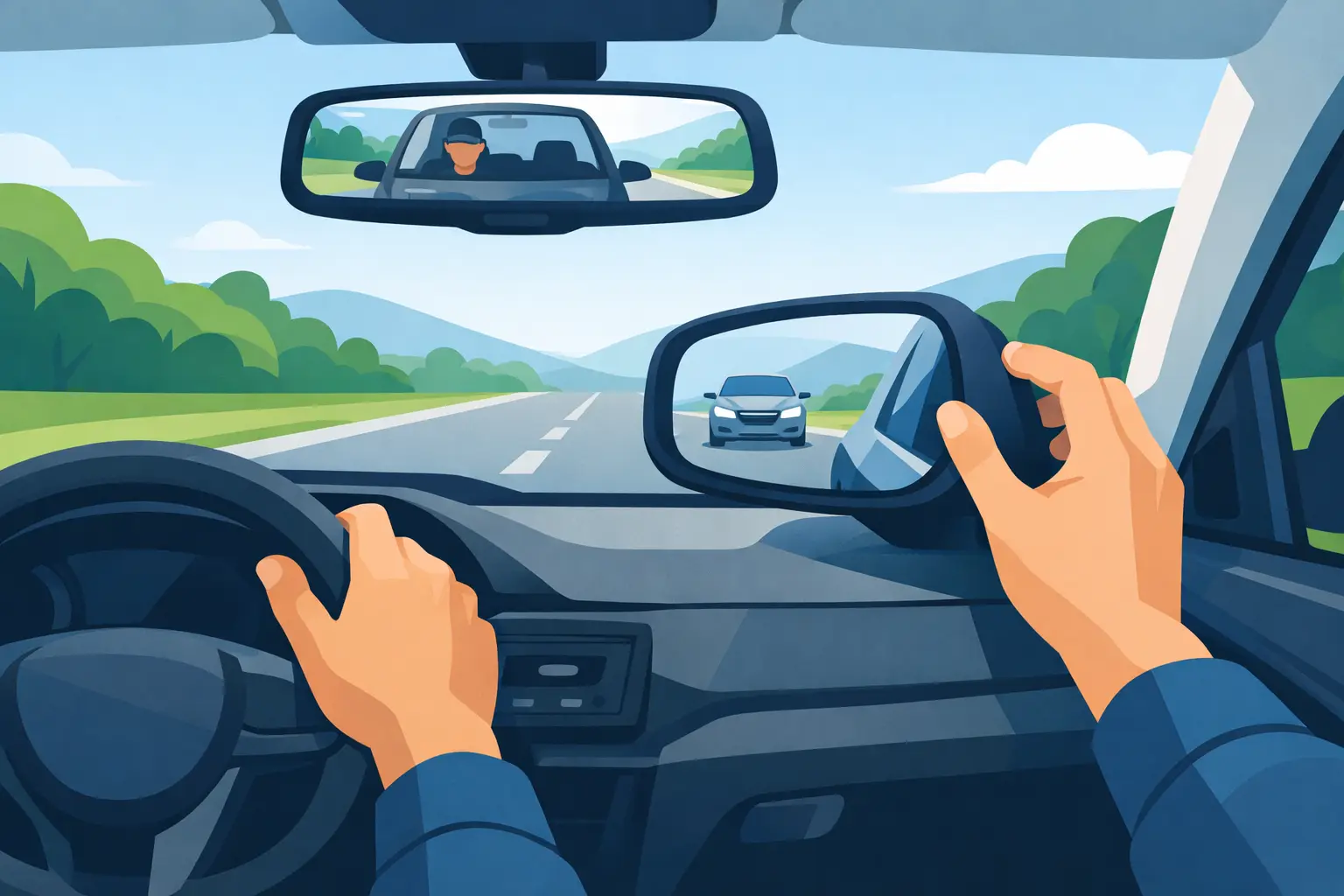
A clear view behind and beside your car can change the way you feel on the road. Knowing how to adjust mirrors safely gives you more time to spot traffic, make controlled lane changes and reverse with confidence. It is a small routine, but one that supports safer driving every time you get behind the wheel.
For learner drivers in Perth, mirror adjustment is also part of good test preparation. Your assessor wants to see that you can prepare the vehicle properly, observe effectively and make decisions without rushing. Start with your mirrors before the engine is moving, not while you are joining traffic.
Adjust your seat before your mirrors
Mirrors only work properly if your driving position is already set. If you move the seat, recline the backrest or change the steering wheel position after adjusting the mirrors, your view will change too.
Sit comfortably with your back supported by the seat. You should be able to press the brake pedal firmly without stretching, and your wrists should reach the top of the steering wheel while your shoulders stay against the seat. Set the head restraint around the middle of your head where possible. Once you are settled, then adjust the centre mirror and side mirrors.
This order matters especially when you drive a family member’s car, use a lesson vehicle or hire a vehicle for your practical driving assessment. Another driver’s settings may not suit your height or seating position at all.
How to adjust mirrors safely before moving off
Make your adjustments while the vehicle is parked safely, with the handbrake applied and the gear selector in Park for an automatic. Take a moment rather than trying to set a mirror while rolling down the street. Looking down or reaching for controls when the car is moving takes your attention away from pedestrians, cyclists and changing traffic conditions.
Set the centre mirror first
Your centre mirror should frame the entire rear window as evenly as possible. You want to see the road directly behind your vehicle, not most of the back seat, your own face or the roof lining.
Use the small lever underneath the mirror if you need to reduce glare from headlights at night. The anti-glare setting can make bright lights less distracting, but it also makes the image dimmer. In low-light conditions, give yourself a little extra time to identify vehicles behind you.
The centre mirror is useful for checking approaching traffic, watching for vehicles following closely and preparing for braking or turning. It does not show the areas beside your car, so it can never replace side-mirror checks and head checks.
Adjust the driver’s side mirror
Lean your head slightly towards the driver’s window while parked. Adjust the mirror so you can just see a small edge of your own vehicle at the inner side of the mirror, with plenty of road visible beside and behind you. Return to your normal driving position and check the view again.
The goal is to see traffic in the lane beside you without filling half the mirror with the side of your car. Seeing a narrow reference of your vehicle can help new drivers judge position, particularly when parking. Too much car in the mirror, however, reduces the view of nearby traffic.
Adjust the passenger side mirror
For the passenger side, lean a little towards the centre of the car, then adjust the mirror to show a small amount of the vehicle and a wide view down the side. When you sit normally, you should have a useful view of vehicles, bicycles and kerbside activity on that side.
This mirror is particularly helpful when moving left, entering a gap, changing lanes and reversing near a kerb. It can also help you see the rear wheel area when parking, although you should still observe around the vehicle before and during the manoeuvre.
Reduce blind spots, but do not trust mirrors alone
Even correctly adjusted mirrors cannot show everything. The blind spot is the area beside and slightly behind your vehicle that is hidden from your mirrors. A motorbike, cyclist or small car can be there, even when your mirrors appear clear.
Before moving off from the kerb, changing lanes, merging, turning at a roundabout or opening your door, use the correct observation routine. Check your centre mirror, check the relevant side mirror, indicate when required, then perform a quick head check over the appropriate shoulder before moving.
A head check is a fast glance, not a long look. Keep your steering steady and return your eyes to the road ahead straight away. This habit takes practice, but it becomes natural when you repeat it during every lesson and drive.
Do not assume that a vehicle will stay in the same place after you first see it in the mirror. Traffic moves quickly on Perth roads, especially near freeway entries, multi-lane intersections and busy shopping areas. Check again close to the moment you make your move.
Use mirrors properly when reversing
When reversing, mirrors help you monitor the sides of the vehicle, nearby kerbs and other road users. They are useful, but your main responsibility is to look where the car is travelling and keep scanning around the area.
Before reversing, check all around the vehicle. Look through the rear window where practical, use your mirrors and turn your head to scan for people walking behind the car. Children, pets, trolleys and low objects can be difficult to see, particularly in car parks and driveways.
A reversing camera can be a helpful extra view, but it is not a substitute for direct observation. Cameras have limits, may be dirty or affected by glare, and can make it easy to focus on one small screen rather than the full environment. Reverse slowly enough that you can stop if something enters your path.
Check mirrors often, not constantly
Good drivers keep up a regular mirror routine. A brief glance at the centre mirror every few seconds helps you understand what is happening behind you. You should also check mirrors before slowing, braking, turning, changing lanes and responding to hazards.
There is a balance. Staring at mirrors for too long means you are not looking ahead, where the next hazard may be developing. Use quick, purposeful glances. Your eyes should return to the road ahead after each check.
For example, if traffic ahead begins to slow, first look forward and create space. Then check the centre mirror before braking so you know whether a vehicle behind is close. This gives you a clearer picture and helps you brake smoothly rather than suddenly where possible.
Common mirror mistakes learner drivers can avoid
A frequent mistake is adjusting mirrors after pulling away. Set them before you move, even if you only need a few seconds. Another is using the mirrors as the only check before changing position. Mirrors reduce blind spots, but they do not remove them.
Some learners also angle side mirrors too far down to watch the kerb. That can be useful briefly for a parking manoeuvre, but it leaves less view of traffic beside you. Once parked, reset the mirrors before driving away. If the vehicle has electronic mirror controls, make small adjustments while stationary and confirm the final position from your normal seat.
Finally, keep the mirrors clean. Dust, rain marks and a fogged rear window can reduce your view at the worst time. Before a drive, make sure the glass is clear and the mirrors are secure. If a mirror is cracked, loose or cannot be adjusted properly, do not ignore it.
Build the habit before your driving test
During a practical driving assessment, mirror use should look calm and natural. You do not need exaggerated head movements or repeated checks that distract you from the road. What matters is showing that you observe at the right times and respond safely.
Practise your vehicle set-up routine in the same order each time: seat, steering wheel if adjustable, centre mirror, side mirrors, seatbelt and controls. Then, while driving, connect every action to an observation check. Before you brake, turn, move off, change lanes or reverse, make your checks early enough to make a safe decision.
If you feel unsure about where to look during lane changes, roundabouts or reverse parking, a calm practical lesson can help you build that routine in real traffic. At North East Driving School Perth, the focus is on helping learners understand the reason behind each check, not simply memorise a test sequence.
Your mirrors are there to support your awareness, not to make driving feel complicated. Set them before every trip, use quick checks at the right moments and always add a head check when moving sideways. With steady practice, that preparation becomes one of the simplest ways to feel more in control on the road.