



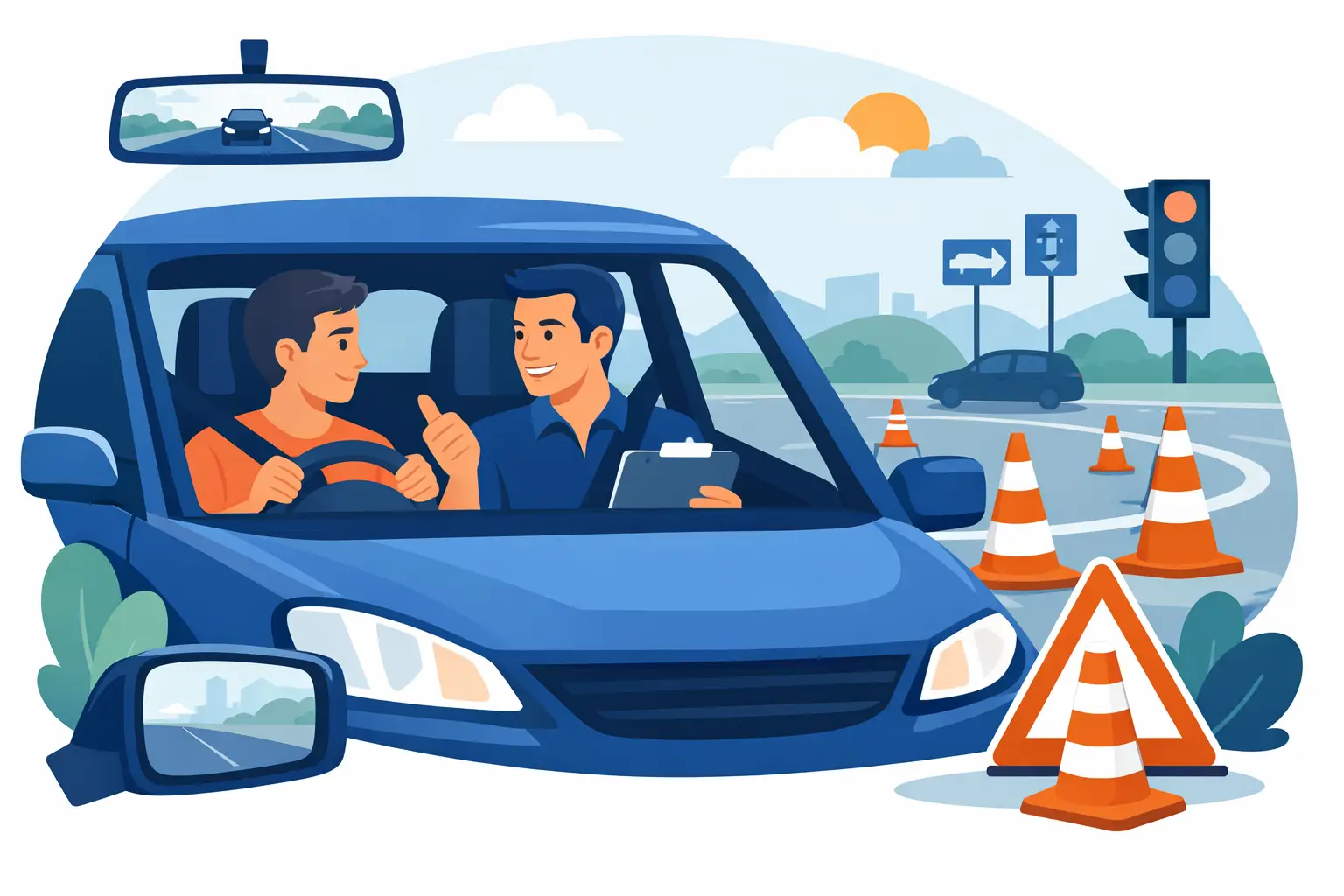
Your first time in the driver’s seat can feel bigger than it is. You might be excited to get moving, worried about making a mistake, or unsure what to expect first lesson. The good news is that a first driving lesson is not a driving test. It is a calm, practical introduction designed to help you feel comfortable with the car, the controls and the road.
At North East Driving School Perth, the focus is on helping you build confidence at a pace that feels manageable. You do not need to arrive knowing how to do everything. You only need to arrive ready to listen, ask questions and give it a go.
What to expect at your first driving lesson
Most first lessons begin with a quick chat before the car moves. Your instructor will check your learner permit and may ask about any driving experience you already have. That could include practising with a parent, driving in a quiet car park, or having never sat behind the wheel at all.
Be honest about how you feel. If you are nervous, say so. If you have practised before but struggle with roundabouts, steering or judging gaps in traffic, mention that too. Clear information helps your instructor choose the right starting point for you.
Your instructor will also explain how the lesson will run. For a complete beginner, this usually means starting in a quieter Perth street or low-traffic area rather than heading straight onto a busy main road. If you already have some experience, the lesson may begin with a short drive to see your current control and confidence level.
A professional driving instructor has access to dual controls, including a brake on the passenger side. This gives you extra support while you learn. It does not mean your instructor expects something to go wrong. It simply means you can practise knowing there is another layer of safety in the car.
Before you drive: getting comfortable in the car
Before turning the key or pressing the start button, you will learn how to set yourself up properly. Good driving starts with a good driving position. Small adjustments can make a real difference to your control of the pedals, steering wheel and mirrors.
Your instructor will guide you through adjusting the seat so you can comfortably reach the pedals, setting the steering wheel position, checking the rear-view and side mirrors, and putting on your seatbelt correctly. You will also be shown the basic controls, such as indicators, windscreen wipers, headlights, hazard lights and demisters.
This is a useful time to ask questions. You do not have to memorise every switch in the first few minutes. Your instructor will explain the controls you need for that lesson, then build on them as your skills grow.
If you wear prescription glasses or contact lenses for driving, bring them. Wear flat, secure shoes that let you feel the pedals properly. Thongs, loose slides and high heels can make pedal control harder, particularly while you are still learning.
Your first time moving the car
For many learners, the first goal is simple: move off smoothly, travel a short distance, then stop safely. In an automatic car, you will learn how to select the right gear, use the brake and accelerator with controlled pressure, steer steadily and look where you want the car to go.
Your instructor may talk you through each action in a clear sequence. For example, you might check mirrors, indicate if needed, look for hazards, release the brake gradually and gently apply the accelerator. It can feel like a lot at first, but repetition is how these steps become natural.
Do not worry if your steering feels stiff, you brake too firmly or you need reminders about where to look. These are normal beginner habits, not failures. A good lesson gives you time to correct them without pressure.
Your instructor may use simple prompts such as “look ahead”, “ease off the brake” or “check your left mirror”. This is not criticism. It is practical coaching to help you connect observation with action. As you improve, you will need fewer prompts and make more decisions independently.
The skills you may practise first
Every learner progresses differently, so there is no fixed first-lesson checklist. However, most beginners will work on basic car control and safe observation before moving onto more complex traffic situations.
You may practise moving off and stopping, steering around quiet streets, maintaining a safe road position, using indicators, checking mirrors and responding to simple intersections. Your instructor may also introduce scanning ahead for parked cars, pedestrians near the footpath, cyclists and changing speed signs.
You probably will not be expected to tackle difficult roundabouts, freeway merging or peak-hour traffic in your first lesson. Those skills matter, but timing matters too. Pushing into challenging conditions before you have basic control can make a learner feel overwhelmed. A steady progression builds better habits and stronger confidence.
If you have already practised with a supervising driver, your first professional lesson may cover more. Your instructor might assess your lane position, braking, observation at intersections or approach to roundabouts. There is no advantage in pretending you are less experienced than you are, or more experienced than you are. The right lesson is the one that meets you where you are.
Mistakes are part of learning
Nearly every learner makes mistakes in their first lesson. You may forget an indicator, turn the wheel too early, brake late or glance at the controls when you should be looking ahead. That is why you are learning with an instructor.
The aim is not perfection. The aim is to understand what happened, correct it safely and try again. A patient instructor will explain the reason behind the correction, not just tell you what to do. For example, checking mirrors is not a box to tick. It helps you know what is around your car before you slow down, turn or change direction.
Try not to judge your progress by one awkward moment. Learning to drive involves physical coordination, road awareness and decision-making at the same time. It takes practice for these skills to work together.
What to bring and how to prepare
Bring your valid WA learner permit to every lesson. If you are using glasses or contact lenses for driving, make sure you have them with you. It is also sensible to have your learner log book or the relevant logbook app ready, depending on how you record your supervised driving hours.
Arrive a few minutes early if you are meeting your instructor at a set location. If you are being picked up from home, school, work or another agreed location, be ready at the arranged time. A lesson is more useful when you can start relaxed rather than rushed.
You do not need to study the road rules all night before your first drive. Still, having a basic look at signs, give-way rules and speed limits can help you understand your instructor’s directions. If you are unsure about anything, ask during the lesson. Questions are a sign that you are paying attention.
What happens after the lesson
At the end of your lesson, your instructor will usually discuss what went well and what to practise next. You may be encouraged to work on smooth braking, mirror checks, steering control or looking further ahead. These small goals give your next practice drive a clear purpose.
If you practise with a parent, family member or other qualified supervising driver, share what you worked on. Consistent advice can make it easier to improve. It is also helpful to keep early practice sessions short and focused. Twenty calm minutes in quiet streets can be more valuable than a long drive that leaves you stressed.
Some learners are ready for regular lessons straight away. Others benefit from time between lessons to practise and settle into the basics. The best schedule depends on your availability, budget, previous experience and how often you can practise outside professional lessons. Regular driving usually helps skills stay fresh, but steady progress is more valuable than rushing.
Your first driving lesson is simply the first step towards independence. Turn up prepared, allow yourself to be new at it and focus on one skill at a time. With calm guidance and regular practice, the car will soon feel less unfamiliar and the road ahead will feel far more achievable.