



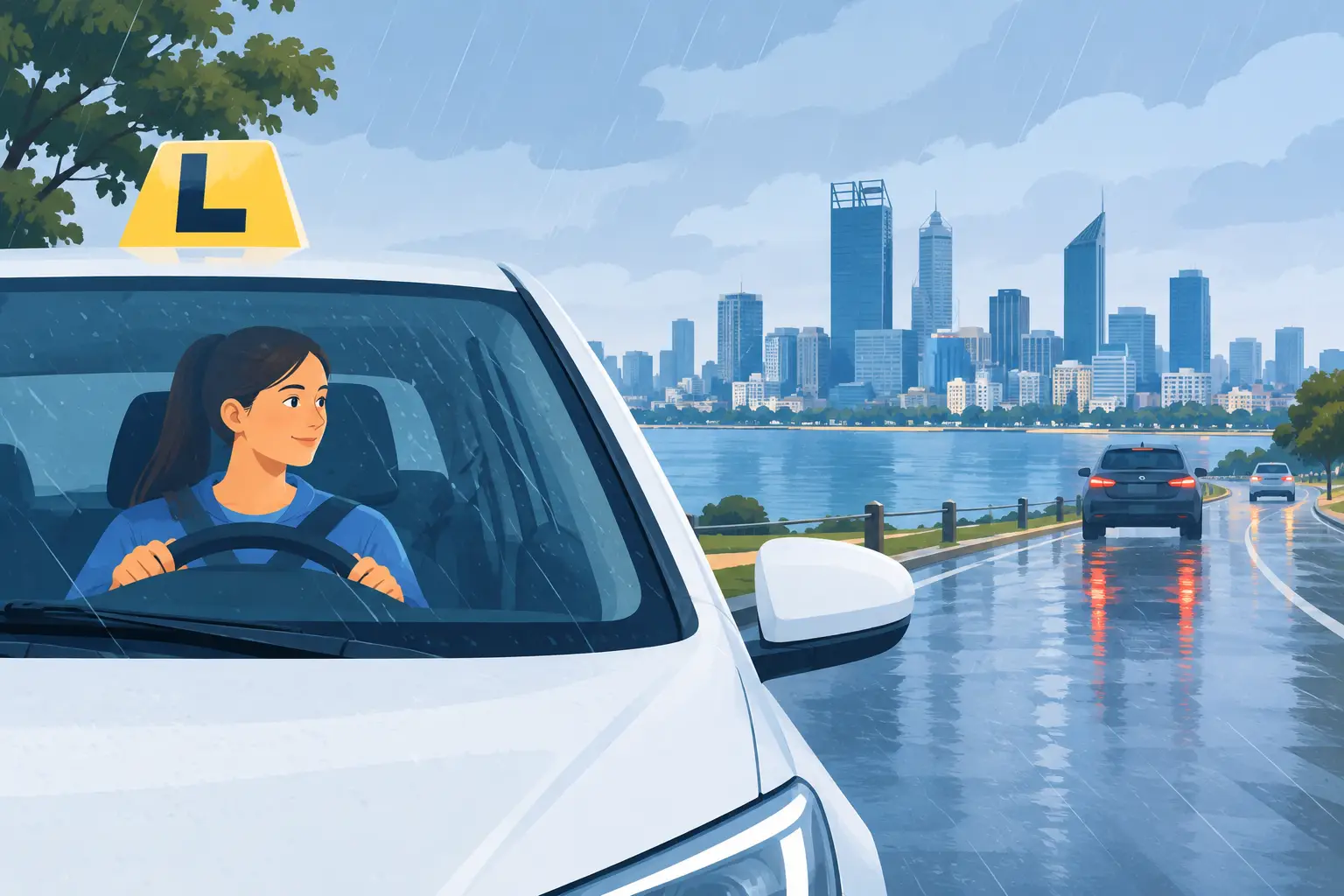
A Perth downpour can turn a familiar street into a very different drive. Painted lines become slippery, puddles hide road surface changes and glare can make it harder to spot vehicles, cyclists and pedestrians. This wet weather driving guide is for learner drivers who want to stay calm, make safer decisions and keep control when rain arrives.
The goal is not to be frightened of wet roads or avoid driving whenever it rains. Rain is part of real-world driving. With the right preparation, extra space and smoother control, it is a valuable condition to practise with an experienced supervising driver or instructor.
Wet weather driving guide: start before you move
Safe wet-weather driving starts while the car is parked. Your tyres are the only part of the vehicle touching the road, so their condition matters even more in the rain. Check that tyres have adequate tread, look for obvious damage and make sure they are correctly inflated. Low or worn tyres have less grip and are more likely to lose contact with the road surface in standing water.
Clear all windows, mirrors and lights before setting off. Demisters take a little time to work, so do not wait until the windscreen is fogging up while you are moving. Set the fan and air conditioning to keep the cabin dry, and make sure the wipers clear the windscreen properly rather than smearing water across it. If the wiper blades are leaving streaks, they need attention.
Use your headlights whenever visibility is reduced by rain, spray, mist or a dark sky. This helps other road users see you. Low-beam headlights are the right choice in most wet conditions. High beam can reflect off rain and mist, reducing your own visibility.
Before pulling away, give yourself more time than usual. If you are heading to work, university or a driving test, rushing is where many poor decisions begin. A few extra minutes can mean you do not feel pressured to speed up, change lanes late or follow too closely.
Slow down without becoming hesitant
Wet roads reduce tyre grip, especially after the first rain following a dry spell. Oil, dust and small amounts of rubbish on the road mix with water and can create a slippery surface. This is common on busy Perth roads after long dry periods.
Driving safely does not mean crawling along far below the limit when conditions are clear enough. It means choosing a speed that gives you time to see hazards, brake progressively and steer smoothly. The posted speed limit is not always the safest speed for heavy rain, poor visibility or water on the road.
Leave a much larger gap between your vehicle and the one ahead. In dry conditions, learners are often taught to keep at least a three-second following distance. In rain, increase this to at least four seconds, and more if rainfall is heavy, the road is shiny, or you are behind a large vehicle creating spray. More space gives you time to brake gently instead of reacting suddenly.
Smooth inputs are your best friend. Accelerate progressively, brake early and turn the steering wheel with steady hands. Sharp braking, fast acceleration and sudden steering can cause a loss of grip. This matters most at roundabouts, intersections, bends, railway crossings, painted arrows and pedestrian crossings, where surfaces can be particularly slick.
Brake earlier, not harder
A common learner mistake is waiting until the usual braking point, then pressing the brake pedal harder because the car is taking longer to slow down. In wet conditions, begin braking earlier and apply steady pressure. If your car has anti-lock brakes and they activate, keep firm pressure on the pedal and steer where you need to go. Do not pump the brakes.
Look well ahead so you can recognise red lights, stopped traffic and changing conditions sooner. Early observation gives you options. You may be able to ease off the accelerator rather than brake heavily, which is smoother for you, your passengers and the drivers behind you.
Puddles, spray and the risk of aquaplaning
Avoid driving through deep water where possible. A puddle may be much deeper than it looks, particularly near kerbs, underpasses and poorly drained sections of road. It can conceal a pothole, damage the vehicle or affect steering and braking.
If you cannot avoid shallow water, slow down before reaching it, keep both hands on the steering wheel and drive through at a steady, gentle speed. Do not brake sharply in the water. Be considerate of pedestrians at bus stops and people walking along the footpath too. Driving through a puddle quickly can send water across them and may create a dangerous situation.
Aquaplaning happens when tyres lose contact with the road because they are riding on water. The steering may feel light, the car may not respond as expected, or you may feel it drift. If this happens, stay calm. Ease off the accelerator gently, keep the steering wheel straight where practical and avoid sudden braking or turning. As the tyres regain contact, the vehicle should respond normally again.
Large vehicles can throw up heavy spray that blocks your view for a moment. Do not sit beside a truck or bus longer than necessary, and leave enough space behind it that you can still see the road. If you need to overtake, only do so when it is legal, safe and visibility is good enough. Often, the safer choice is simply to hold back.
See clearly and make yourself easy to see
Night rain needs extra care. Headlights reflecting off wet bitumen, shopfronts and road signs can make it difficult to judge distance. Slow down slightly, focus on the road markings and scan for movement near crossings, bus stops and intersections.
Keep your windscreen clean inside and out. A dirty windscreen can make glare worse, even when the rain has eased. Check mirrors often, but do not stare into the headlights of vehicles behind you. Adjust the rear-view mirror to its night setting if your vehicle has one.
Be especially patient around pedestrians, cyclists and motorcyclists. Their visibility may be reduced, they may need more room to avoid puddles, and wet surfaces make stopping or turning harder for them too. Give them space and do not assume they have seen you.
Intersections need more patience
At intersections, rain can hide road markings and make it harder to see indicators or brake lights through spray. Approach at a controlled speed and be prepared for another driver to stop suddenly or make an error. When turning, check carefully for people crossing the road. Rainy conditions can encourage pedestrians to rush, sometimes while looking down at an umbrella or hood.
If traffic lights are not operating, treat the intersection with care and follow the road rules for the situation. Do not assume other drivers will react correctly. Your priority is to move only when you have a safe, clear gap.
A simple wet-weather routine for learners
When rain begins, give yourself a quick reset rather than carrying on as though nothing has changed. A useful routine is to check these five things:
- Turn on low-beam headlights and adjust the wipers and demister.
- Increase the gap to the vehicle ahead.
- Reduce speed to suit visibility and road grip.
- Scan further ahead for water, braking traffic and pedestrians.
- Use gentle steering, braking and acceleration.
This routine is simple enough to use without taking your attention away from the road. With practice, it becomes part of your normal driving process rather than something to remember under pressure.
Practise in the right conditions
Wet-weather experience builds confidence, but it should be gradual. Start on familiar local streets in light rain with an experienced supervisor or qualified instructor. Practise moving off smoothly, stopping earlier, using the demister and judging safe gaps at roundabouts. Once you are comfortable, you can build up to busier roads, night driving and heavier rain.
There are times when delaying the trip is the sensible choice. If rain is extremely heavy, flooding is reported, visibility is very poor or you feel too anxious to concentrate, wait until conditions improve. Good drivers do not prove themselves by pushing through every situation. They make decisions that protect themselves and everyone around them.
A wet road asks for more patience, not more panic. Each calm, well-planned trip in the rain helps you develop the observation, control and judgement that will support you long after you have earned your licence.